SUCCESS STORIES FROM THE FIELD
April – June 2026
Somalia: Operationalization of The National Protection of Civilians Policy

Previously, CIVIC had provided critical support to the government of Somalia to develop its National Protection of Civilians (POC) policy. This quarter, CIVIC provided technical and strategic support to the Federal Government of Somalia to translate the policy into an institutional mechanism for implementation. Following the government’s endorsement of the National POC Policy on 2 April 2026, CIVIC worked with the Ministry of Defence to establish the Government National POC Operationalization Task Force, which it then formally launched on 2 June 2026. The Task Force represents a critical step toward institutionalizing the policy and establishing government-led mechanisms to translate its commitments into concrete action.

The Task Force brings together the Ministry of Defence, Ministry of Internal Security, Ministry of Justice and Constitutional Affairs, Ministry of Interior, Office of National Security, National Human Rights Commission, Office of the Special Envoy, Federal Member States, and civil society representatives under a single government-led coordination platform. It is mandated to coordinate policy implementation across institutions, develop the national operationalization framework and implementation plan, integrate civilian protection into security operations, and monitor progress nationwide.
CIVIC supported this initiative through technical advisory support to the Ministry of Defence, including facilitating inter-ministerial consultations and stakeholder coordination, supporting the drafting of the Task Force’s Terms of Reference, providing technical expertise, and advising on implementation arrangements designed to strengthen government ownership.
Mali: CPG Advocacy Secures Protection for Newly Displaced Families in Sofara

After newly displaced families from Timilini commune in Bandiagara began to arrive in Sofara in June, the Sofara CPG mobilized to identify and address their protection concerns. The Timilini displacement was driven by repeated attacks by armed groups, which forced families to flee their homes and seek safety in Sofara. Many arrived with limited resources and faced significant challenges in meeting their basic needs. The CPG advocated to local authorities to secure a safe location for the IDPs to settle. Local authorities subsequently allocated a temporary site for the IDPs, providing 152 displaced households with safer living conditions. The temporary site helped reduce the protection risks associated with overcrowded and precarious living arrangements, particularly for women and children who can face increased exposure to GBV in such unsafe environments.
 CPG members then worked with local authorities to ensure that the displaced population was formally registered, enabling the households to receive humanitarian assistance. This registration was particularly important given the initial lack of humanitarian and social targeting of the newly displaced population, which had limited their access to essential assistance, including food, water, shelter, healthcare, and other services.
The CPG’s advocacy helped to address not only the immediate need for safer accommodation, but also the broader vulnerability of displaced families by facilitating their identification and access to humanitarian support. The intervention also helped ease some of the pressure on host communities, which have limited resources to respond to the needs of newly displaced families.
The intervention demonstrates how CIVIC-supported CPGs can mobilize coordinated responses to emerging protection concerns by working across local authorities and humanitarian actors.
Yemen: CIVIC-supported CPG Secures Government Response to a Protection Case

In May 2026, a CPG in Sheikh Othman District supported a marginalized woman to address a protection concern after she was the victim of an assault. She initially filed a complaint with the district authorities, but did not receive a response. She subsequently received threats intended to deter her from pursuing the complaint, including threats against her disabled husband.

The CPG documented the case and assessed the protection risks, then engaged the relevant authorities to support the survivor’s access to formal protection and justice mechanisms. CPG members accompanied her to the prosecution office, where a formal complaint was submitted and legal action was initiated.
This intervention demonstrates the CPG’s role in identifying protection concerns and influencing relevant government institutions to fulfill their responsibilities in responding to them. Through engagement with the appropriate authorities, the CPG helped facilitate access to the formal justice system and supported government institutions to take action on a protection concern that had not been adequately addressed through the initial reporting mechanism.
January – March 2026
Sudan: Improving Safety for Returning Communities Through Community-Led Protection
 Following the withdrawal of the Rapid Support Forces (RSF) from neighborhoods in Khartoum North in 2025, displaced communities began returning to areas heavily damaged by conflict. A particularly high concentration of families returned to the Arkwait area. However, upon their return, the families encountered widespread destruction, collapsed infrastructure, and a lack of basic services.
 After signing a Memorandum of Understanding with the Ministry of Social Welfare and the Humanitarian Aid Commission (HAC) to establish operational access to the area, CPGs that had been established by CIVIC, in partnership with Sudan Aqwa, conducted a protection assessment. One of the most critical protection concerns identified in the assessment—particularly by women—was the absence of street lighting, which increased risks of theft, intimidation, and sexual and gender-based violence after dark.
To address these findings, CIVIC, the CPGs, and Sudan Aqwa worked with the Khartoum State Ministry of Social Welfare and the Humanitarian Aid Commission to initiate the installation ofsolar-powered street lighting along key roads and public spaces in February 2026, improving visibility and enabling safer movement, particularly for women and girls at night. In parallel, sanitation and environmental campaigns addressed damaged sewage systems and deteriorating living conditions, contributing to improved health, dignity, and overall well-being for returning families. The project targeted approximately 1,500 households from the Arkwait community.
Ukraine: Independently Functioning Community Civilian Protection Systems
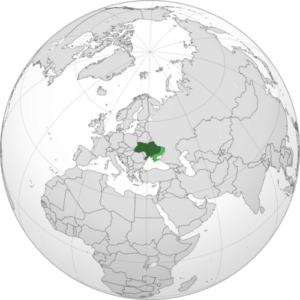
Between 23–27 February 2026, CIVIC conducted a final evaluation following the completion of a two-year PSOPs-supported project. The evaluation found that four frontline communities in Mykolaiv oblast (Pivdennoukrainsk, Arbuzynka, and Buzke) and Kherson oblast (Kochubeivka) had sustained and continued to independently operate the civilian protection systems that CIVIC helped them establish, even under active conflict conditions and without external facilitation.
The assessment found that CPGs continued conducting risk assessments, holding community meetings to discuss protection concerns, developing emergency roadmaps, conducting first aid and evacuation trainings, carrying out mine and drone awareness activities, and providing procurement support for safety infrastructure.
Communities noted that these systems had produced many tangible improvements for community protection. For example, in Arbuzynka, participants specifically noted that sirens procured and installed through the project helped elderly residents in villages who do not use smartphone alert applications react more quickly to warnings. In Kochubeivka, shelter upgrades, including ventilation, equipment, and furniture, increased readiness for emergency use and enabled shelters to pass official inspections. Across all four communities, the protection systems maintained structured coordination, and community members involved in implementation had defined roles and responsibilities. These developments indicate a shift from externally supported activities to sustained locally-led protection operations.
Somalia: Supporting the Adoption of a National Civilian Protection Policy

CIVIC provided technical advisory support and sustained advocacy to the Federal Government of Somalia, leading to the development and approval of the National Civilian Protection Policy (NCPP) by the Cabinet of Ministers. Led by the Ministry of Defense in coordination with relevant federal institutions, the policy establishes a national framework for preventing, mitigating, and responding to civilian harm in conflict-affected and frontline areas.

The NCPP introduces practical measures including early warning and risk communication systems, protections for displaced and vulnerable populations, safeguards for humanitarian personnel, and oversight mechanisms to strengthen accountability within security institutions.
By supporting the design of a policy grounded in operational realities, CIVIC helped advance the institutionalization of civilian protection as acore responsibility of security actors. Following adoption, the Federal Government committed to developing a Civilian Protection Implementation Plan to operationalize the framework across ministries, security institutions, and Federal Member States. This milestone creates a foundation for more consistent and accountable approaches to reducing civilian harm during military and security operations.
Mali: Strengthening Civilian Protection through Civilian-Military Dialogue

To address the growing impact of drug trafficking on civilian safety and community security in Bandiagara, CIVIC supported a civil-military dialogue that brought together CPGs, local authorities, and Defense and Security Forces.
CIVIC formed and trained the CPGs on POC and advocacy, and also provided technical support to facilitate a structured dialogue process that included preparatory meetings followed by a joint workshop. This created a trusted and inclusive space where participants openly shared perspectives, concerns, and operational challenges related to drug trafficking and its effects on communities.

Through the dialogue, participants jointly examined how drug trafficking contributes to protection risks. They highlighted its role in increasing violent criminality, strengthening armed and criminal actors, and exposing civilians to harm. Specific risks were identified across different groups: youth face drug use, coercion into trafficking, school dropout, and increased vulnerability to recruitment and exploitation; children are exposed to violence, trauma, and disruption of education; and women and girls face heightened risks of harassment, sexual and gender-based violence, and restricted movement affecting access to services and livelihoods.
Participants also identified key vulnerabilities, including weak community alert systems, uneven security presence, limited use of reporting mechanisms, and the normalization of violence linked to drug circulation.
The dialogue concluded with jointly identified action points and recommendations, including improving patrols in high-risk areas, strengthening checkpoint practices to make them more protective, and increasing awareness on reporting mechanisms.
Nigeria: De-escalating Tensions Between Youths and Soldiers Through Community Mediation

On October 3, 2025, tensions rose in Madagali after community youths assaulted a soldier reportedly involved in forcefully seizing motorcycles at checkpoints. Recognizing the risk of further escalation, female members of the CPC reported the incident to the military unit commander and the community leader and sought urgent intervention.

The District Head convened a dialogue involving the youth leader, religious representatives, and the unit commander. Initial discussions were tense, with youths expressing frustration over perceived injustices and soldiers feeling misunderstood. To manage the high emotions, female CPC members drew on their training to engage the youths on the consequences of their actions for community stability. Many of these women were mothers, which is notable because women in maternal roles are often particularly influential amongst youth. Meanwhile, male CPC members and the community leader met separately with soldiers to understand their concerns. Through these parallel engagements, the CPC facilitated collaborative problem-solving, encouraging youths and soldiers to propose practical ways to improve safety and mutual understanding. The intervention successfully de-escalated the situation and established a foundation for ongoing constructive engagement between the community and security forces.
Somalia: Making Schools Safe for Children Through Civil–Military Dialogue
Following the collapse of the frontline in Adan Yabal, large numbers of frontline forces withdrew to Adale District and occupied civilian infrastructure, including Sh. Ahmed Wacdiyow (Gabiyow) Secondary School and Adale Primary School. The military use of these facilities exposed children—particularly girls—to heightened protection risks such as SGBV and forced the suspension of schooling.

CPGs raised these concerns through CIVIC-facilitated civil–military dialogue, emphasizing the risks to children and the availability of alternative sites for military use, including a vacated African Union Transition Mission in Somalia (ATMIS) base. With CIVIC’s support, these concerns were escalated to senior Somali National Army leadership in Mogadishu.
As a result of this engagement, one school was fully vacated and is currently under renovation by a local NGO and SNA to be fully returned to civilian use once the renovation is complete. reopen. The Somali National Army also committed to vacate the second school within four weeks to allow for the relocation of personnel and logistics, creating the conditions for children to safely return to school and reducing protection risks in the community.
Ukraine: Faster Care When Every Minute Counts

In Arbuzynka and Pivdennoukrainsk, Mykolaiv Oblast, emergency response to mass casualty incidents in local hospitals previously lacked coordinated systems. Unclear roles, inefficient patient routes, and weak interdepartmental coordination often led to delayed care.

In May 2025, CIVIC awarded a CSO funding through an LIF to address these gaps. Through simulations, expert mentoring, and structured self-assessment, hospital teams analyzed their emergency response and implemented practical, low-cost improvements.Using the LIF support, patient pathways were redesigned, triage and zoning optimized, roles clarified, and standardized checklists introduced for rapid staff mobilization.
To assess project outcomes, the CSO measured the time required to transport a patient from the emergency admission area to the operating theatre before and after the intervention. Results showed that patients reached surgery 2.6 times faster, and overall response time to mass casualty incidents was reduced by 23%. Qualitative data supported the quantitative results, indicating that the reduction in response time was due to an increase in staff confidence and improvements in coordination. The initiative demonstrates how community-driven, system-based improvements focused on civilian protection can deliver measurable impact even under high-pressure, resource-constrained conditions.