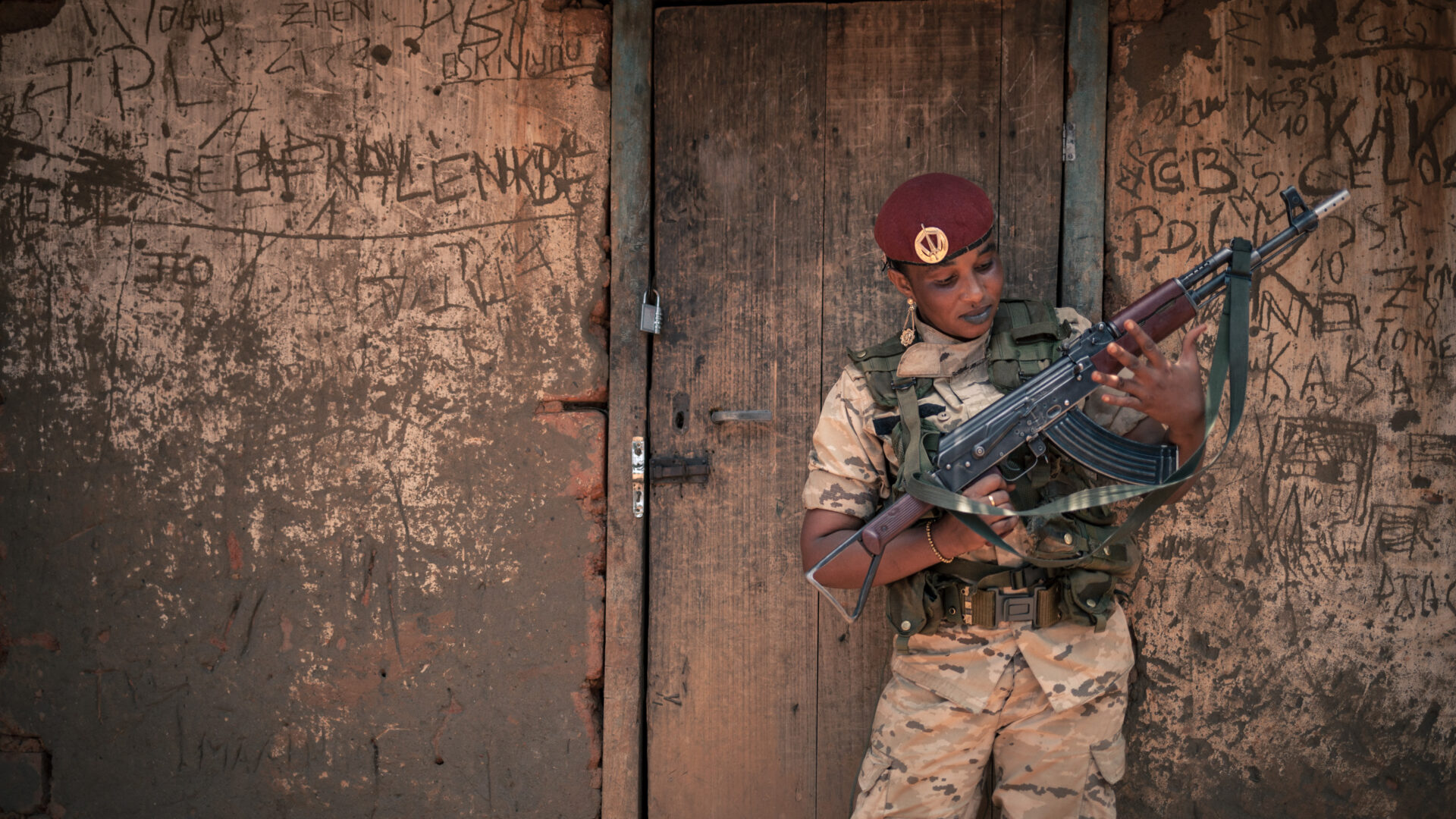
The operations of private military and security companies (PMSC) have a huge impact on the protection of civilians in conflict. Since the end of the Cold War, the operations of PMSC have been on the increase. PMSCs present a tempting, but complicated option for evacuations for civilians, training for the armed forces, logistics support, and even a role in the fighting in some circumstances – including in “counter-terrorism” operations. Their status as non-state actors present a unique challenge in holding them accountable and ensuring the best standard for their operations, especially as it relates to the protection of civilians in conflict situations.
Across the globe, private military and security corporations have become important players in armed conflict. The fluid corporate nature of these entities creates challenges in holding them accountable. The nexus of accountability is weak because they serve economic, political, and security interests. They are sometimes tools for the strategic military interests of powerful countries and enjoy unspoken immunity for crimes they commit against civilians. Many countries where they operate are already in conflict and lack the necessary legal frameworks to hold them accountable. In other instances, they serve to protect the interests of threatened regimes who are all focused on military success with scant regard for International Humanitarian Law or human rights. Documenting the abuses by PMSC present a challenge. There is risk to organizations who undertake these tasks and difficulties in disaggregating data to identify specific abuses attributable to PMSC who are often working with government forces in conflict areas. Absence of strong international accountability framework for PMSC further complicate the challenges.
Without strong regulatory framework for PMSC, there is a high risk that their operations will pose significant risk to civilians. The operations of PMSC over the years have been closely associated with concerns about human rights abuses, civilian harm, corruption, and, in one case, the attempted overthrow of a government. In the early 2000s, PMSC gained even greater notoriety when efforts to stabilize Iraq with the aid of under-regulated private entities—as many as 177 in 2006—resulted in calamities such as the murder of seventeen Iraqi civilians at the hands of contractors from Blackwater, a US firm. These abuses are often cited for having motivated a new global movement among governments, civil society, and the private sector to better monitor and regulate the conduct of private security and military contractors in war. Their proximity to civilians in their operations makes this call very urgent.
Through our research, CIVIC identified a several actions that can be taken to heightened the protection of civilians in environments where PMSC have a presence:
- States are encouraged to sign the Montreux Document on private military and security companies, and adhere to and promote its principles and best practices, which demand transparency in the recruitment process of PMSC.
- National governments hosting PMSC and countries where PMSC are registered must demand the highest level of compliance with International Humanitarian Law and human rights by PMS Cooperating in conflict settings.
- Humanitarian organizations requesting services of PMSC must demand that such companies are comply with ICOCA (International Code of Conduct Association) standards and that the countries where they are registered are signatories to the Montreux Document.
- Development partners and multilateral organization should support local voices and civil society organizations to hold their government and PMSC accountable for actions that harm civilians.
- When operating in the same context as PMSC, intergovernmental bodies and entities such as UN peace operations and the Office of the High Commissioner for Human Rights (OHCHR) should monitor and publish disaggregated data on harm to civilians resulting from PMC activities.
- Given the role it plays in conflict situation across the world, PMSC must exercise the highest level of care to mitigate harm to civilians. Governments and other institutions working with PMSC must ensure robust protection for civilians and accountability framework for PMSC.
Trends & Key Figures
- Current realities show that PMSC operations are inevitable. Their services are increasingly needed in safeguarding humanitarian operations, maritime operations, logistics management in conflict areas, and border security (See trends analysis).
- There has been progress in building a framework for accountability through the Montreux Document and The International Code of Conduct for Private Security Service Providers (ICoC), but huge gaps still exist in having a robust framework that compels good behavior and ensures accountability.
- The market for Private Military Security Services was valued at an estimated USD 241.7 billion in 2021.
- In 2021, the Peace, War and Social Conflict Laboratory at Texas Tech University was monitoring 1,700 PMSCs globally.
- 70 percent of the PMSC market is dominated by the United States, United Kingdom, China, and South Africa.