By Abdullahi Abdille Shahow
Introduction
For over a decade, Kenya’s security forces have faced persistent challenges from al-Shabaab, an armed group based in neighboring southern Somalia and active in Kenya’s border counties. In these regions, Kenya’s military and security forces have been engaged in an asymmetrical guerrilla conflict with al-Shabaab, often leaving civilians caught in the middle. The result has been widespread destruction, deaths, displacement, and strained trust between affected communities and armed actors.
Al-Shabaab has carried out attacks in Kenya since 2011, in retaliation against Kenya’s military intervention that same year. These attacks, targeting both security forces and civilians, ranged from improvised explosive devices (IEDs) placed on major routes to ambushes, raids on remote villages, and assaults on security outposts near the border. The devastating effects of these attacks included thousands of civilian casualties, including permanent injuries, destruction of property, and disruption of civilian life.
The hostilities have devastated the local economy, particularly in Lamu—a once-thriving tourist hub—destroyed livelihoods, and severely hampered essential public services like communication, education, and healthcare. While early attacks targeted major cities like Nairobi and Mombasa, al-Shabaab’s focus shifted post-2015 to border counties such as Garissa, Wajir, Mandera, and Lamu.
Kenyan security forces have responded to these attacks, but their tactics have sometimes been heavy-handed. Reports from organizations like the Kenya National Commission on Human Rights (KNCHR) document violations of international humanitarian and human rights laws, including arbitrary arrests, torture, enforced disappearances, and extrajudicial killings. These actions have further alienated communities and exacerbated mistrust. At the same time, civilians remain insufficiently protected from al-Shabaab attacks.
CIVIC’s Initiatives in Lamu and Wajir counties
Recognizing the protection challenges faced by civilians in these areas, Center for Civilians in Conflict (CIVIC) launched a community-based protection initiative in 2021, funded by Dutch and EU grants. This program aimed to equip frontline, conflict-affected communities with the skills they need to better protect themselves and bridge the gap between the communities and Kenyan security forces through civil-military engagements and dialogue.
This piece assesses the successes, challenges, impact, and lessons learned based on a rapid evaluation and approximately 20 key informant interviews conducted in Lamu and Wajir counties in December 2023. The three-year program concluded in April 2024.
Due to funding limitations, CIVIC piloted the program in Wajir and Lamu, chosen based on various factors including civilian protection risks and an initial assessment, with the long-term goal of expanding to Garissa and Mandera. Activities formally began in 2022 after establishing links with the local communities and military.
Program Activities
CIVIC began with consultative meetings involving county commissioners, county government leaders, the governor of Lamu, and military officials. These discussions helped incorporate stakeholder input into the program rollout. Community leaders played a key role as entry points to the communities, raising awareness and securing early support.
- Community Protection Groups (CPGs):
Recognizing conflict-affected communities as agents of Protection of Civilians (POC) efforts, CIVIC established Community Protection Groups (CPGs) to serve as the backbone of local efforts. In Wajir, the CPG comprised 32 members, while in Lamu, 22 members were selected. he CPGs were inclusive, representing various ethnic groups in the two counties and including men, women, youth, elders, faith leaders, and people with disabilities.
- Capacity Building and Training:
After establishing the CPGs, CIVIC conducted capacity-building workshops with CPG members and military personnel and tailored to the specific protection challenges in Wajir and Lamu. These sessions provided a platform for community members and security forces to speak openly. In Wajir, discussions focused on historical grievances and abuses by security forces, including post-2011 incidents. In Lamu, the emphasis was on mistreatment following al-Shabaab attacks after 2014.
Community-Based Protection (CBP) is CIVIC’s core approach to enhancing the civilian protection in conflict areas. It empowers civilians to take charge of their own safety, positioning them as key agents in safeguarding their communities. The workshops provided CPG members with self-protection skills and tools to engage government and security actors on their protection needs. CIVIC also acted as an advocate and facilitator, bridging the gap between civilians and the Kenyan military in Wajir and Lamu.
CIVIC also trained over 240 Kenyan Defense Forces (KDF) personnel in Protection of Civilians (POC) and Civilian Harm Mitigation (CHM) in Wajir and Lamu. The sessions aimed to shift attitudes, emphasizing the KDF’s duty to safeguard civilians while preventing harm during operations. Junior and mid-level officers from the army, navy, and air force participated, with trainings held at bases in Wajir town and Manda in Lamu.
Northern Kenya serves as a six-month acclimatization station for KDF personnel before they are redeployed as African Union peacekeeping forces in Somalia. CIVIC capitalized on this opportunity to train troops before their deployment, ensuring many left with enhanced awareness of POC principles.
- Civilian-Military Dialogue:
Following the capacity-building workshops, CIVIC organized civilian-military dialogues to foster understanding between trained community representatives and military personnel. These forums allowed both sides to discuss challenges, address mutual concerns, and identify solutions. Such convenings are also an essential step in reducing mistrust and improving protection outcomes.
Civilians raised issues such as being caught between two armed actors, persistent al-Shabaab attacks, and insufficient protection, particularly in remote villages. They also highlighted grievances related to heavy-handed military tactics, including harassment, mistreatment at checkpoints, arbitrary arrests, and collective punishments. For their part, the military shared challenges like identifying al-Shabaab elements hiding among communities. These open discussions helped bridge divides, reduce mistrust, and improve protection outcomes.
Key Achievements and Successes
CIVIC’s program successfully improved trust and coordination between civilians and the military. However, the program’s impact varied: Wajir experienced stronger results due to greater communal cohesion, while Lamu’s ethnic divisions occasionally hindered progress.
Notable successes include:
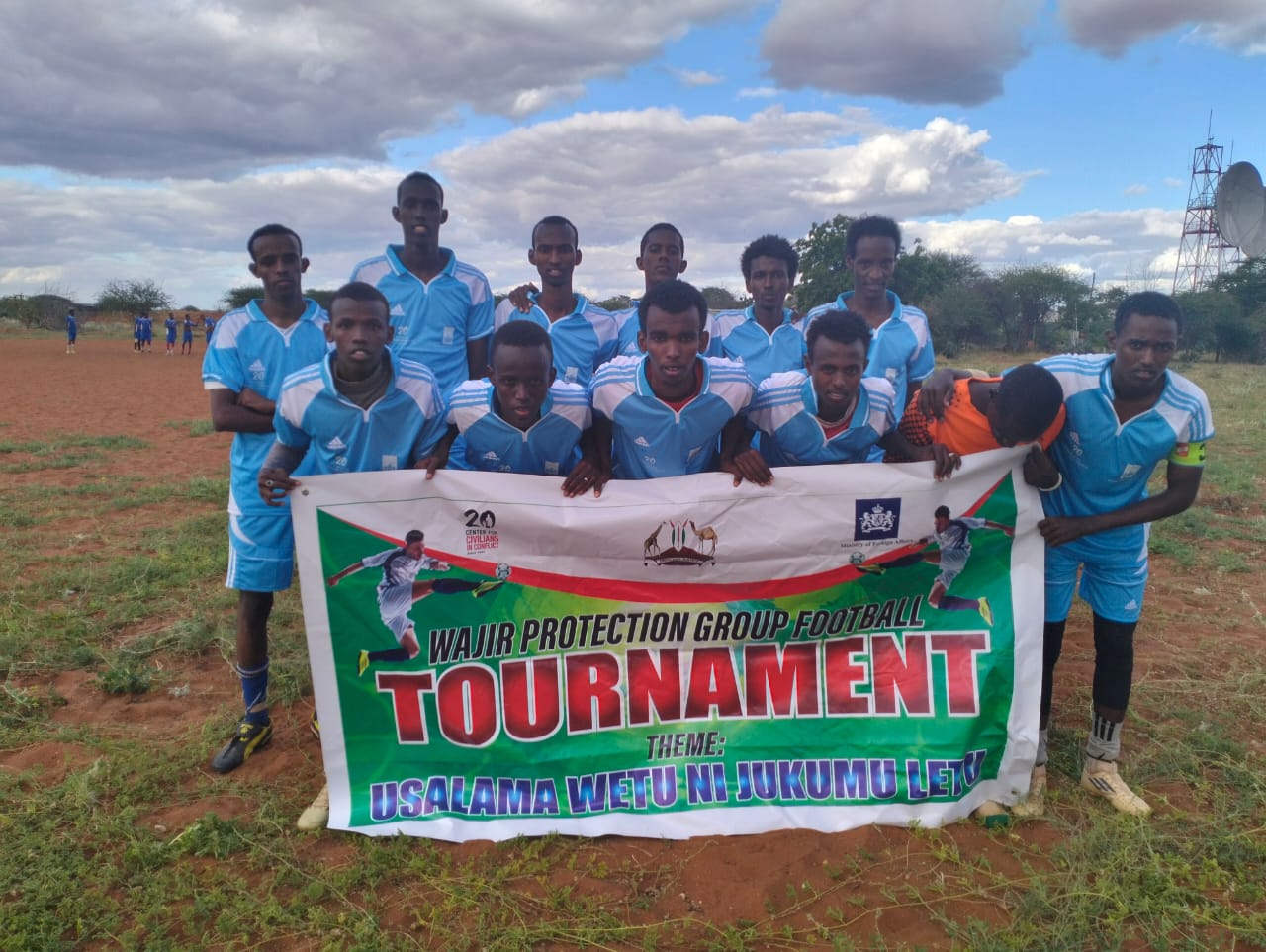
- Social Events: CIVIC organized football matches and Ramadan Iftar dinners, promoting interaction between communities and security forces. In Wajir, a match took place at the military base, a previously restricted venue.
- Improved Communication: In both counties, military liaison officers were appointed to act as communication links between communities and security forces. In Wajir, a suggestion box was introduced at the base gate for community input.
- Local Impact in Geriley (Wajir): Dialogue sessions led to significantly improved relationships. The military began supporting residents with water provision, medical outreach, and infrastructure projects, such as boreholes and a madrasa. Community members reported reduced harassment and a decline in IED incidents.
As a result of these inititiaves, residents described a significant shift in their relationship with the military.
One resident noted:
At first, things were bad, they [the military] hurt us. But now, they bring us water, built a madrasa, and provide medical outreach. The relationship has improved a lot.
Another added:
Now they drink tea with us and give biscuits to the children. They don’t bully us anymore.
The military also began buying livestock directly from locals, boosting the economy, and facilitated safe movement of pastoralists and their herds across the border. A senior military commander remarked:
Residents prefer the military health clinic to the county-funded one.
Thanks to improved coordination in Geriley, the Kenyan military has also facilitated the smooth movement of pastoralists and their livestock across the border in search of pasture and water. They have also enabled residents from Somalia to access healthcare on the Kenyan side, working closely with community leaders and local officials.
Overall, these actions have improved relationships between all parts, reducing attacks and IED incidents, bringing peace to Geriley. In Lamu, a senior county official similarly credited enhanced trust and coordination for improved security.
Challenges and Lessons Learned
The program encountered several challenges that provided valuable insights for future initiatives. These experiences highlight areas for improvement and opportunities to strengthen civilian protection efforts:
- Accessibility Issues:Insecurity, poor infrastructure, and vast distances made it difficult for some CPG members to attend training sessions. Some areas, like Kiunga in Lamu County, were especially difficult to access, with costly boat transport and dangerous road travel due to IEDs and potential ambushes.
- Military Rotations:Frequent changes in security personnel disrupted program continuity, requiring repeated engagements.
- Excluded Police Units:Specialized police units involved in counter-insurgency operations were not part of the program, despite documented civilian harm. Future programming should consider targeting police units.
- Cross-Border Gaps:CIVIC could not extend similar initiatives into Somalia, limiting the program’s impact across the border. Future programming should bridge this gap and foster cooperation between conflict-affected communities and armed actors on both sides of the border.
Key Lesson: Community-based protection and civil-military cooperation are critical for reducing civilian harm in Kenya’s border regions. Sustaining and expanding such programs to counties like Garissa and Mandera is essential.
Conclusion
CIVIC’s community-based protection initiative in Kenya’s border regions has made significant progress in fostering trust and coordination between civilians and the military. Through civil-military engagement through dialogue sessions, sports events, and shared cultural activities, the program has has bridged long-standing divides, enabling both sides to better understand each other’s challenges and perspectives. These efforts have strengthened relationships between security forces and conflict-affected communities, a critical step toward for reducing civilian harm and promoting stability in the region.
However, significant work remains. The need for civilian protection and coordination between frontline communities and armed actors—specifically Kenyan security forces—remains immense in the border counties. The Kenyan government and its security forces must recognize that working with the community significantly improves their ability to protect civilians. As one Lamu resident noted, “We do not have a problem with security forces—it’s they who need to change their attitude towards us.”
To sustain progress, Kenya’s international partners and donors must invest in programs that foster closer cooperation between communities and security forces to reduce civilian harm. Besides, it is vital for CIVIC and its partners to support existing Community Protection Groups, expand initiatives to counties like Garissa and Mandera, and target specialized police units involved in counter-insurgency operations. Future programming could also extend to Somalia, fostering cross-border cooperation.
By building on these successes, CIVIC can empower conflict-affected communities to better protect themselves and strengthen their partnerships with security actors—paving the way for sustained security and lasting peace.
Abdullahi Abdille Shahow is East Africa Researcher at CIVIC. Twitter: @a_abdille