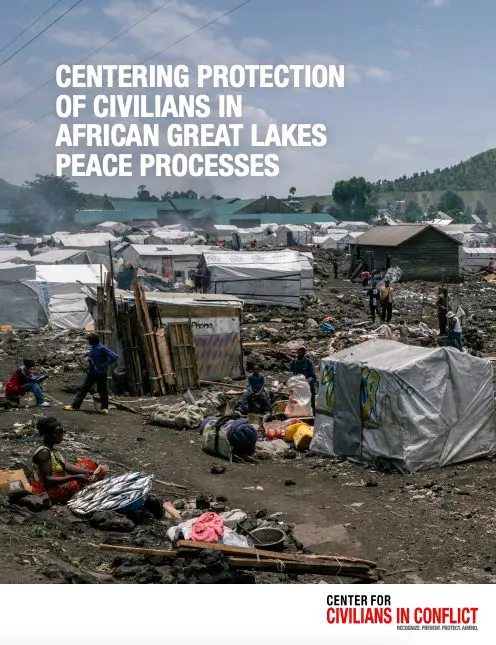
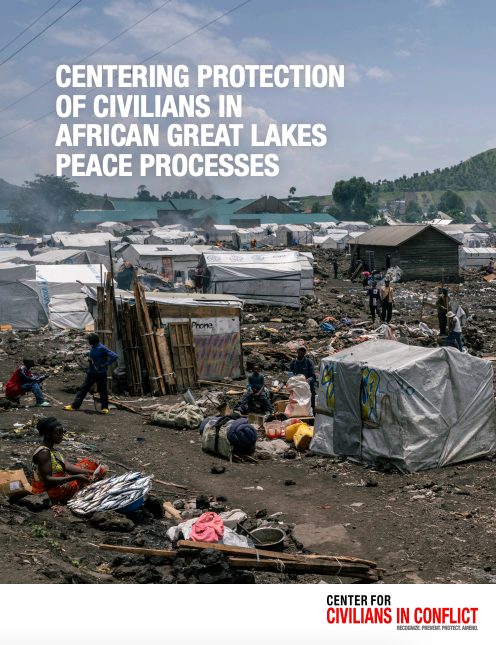
The prolonged crisis in the Democratic Republic of the Congo (DRC) and the broader Great Lakes region continues to be marked by persistent armed violence, civilian harm, and ongoing humanitarian emergencies. Millions of civilians—particularly in the eastern DRC provinces of North Kivu, South Kivu, and Ituri—continue to endure serious abuses, including mass killings and maiming, sexual violence, child recruitment and use by armed actors, forced displacement, abductions, and destruction of civilian infrastructure.
The causes and consequences of the conflict, including for civilians, extend to several countries in the region, among them South Sudan, Kenya, Uganda, Rwanda, Burundi, and Tanzania.
The ongoing Washington and Doha peace processes represent two of the most recent international efforts to de-escalate the crisis in the DRC and the wider Great Lakes region, building on years of African Union (AU)-led mediation (the Nairobi and Luanda processes). At the national level, the CENCO–ECC-led dialogue has long provided a Congolese-owned platform for reconciliation, elections, and governance reforms. Yet this process is currently stalled, with little progress in bridging divides among key actors, reducing its immediate impact despite its domestic legitimacy.
The Washington process—framed by the Washington Declaration of Principles, the Washington Agreements, and their annexes (including the CONOPS)—focuses on defining political and security arrangements between the DRC and Rwanda and establishing a roadmap for implementation. In parallel, the Doha process—anchored in the Doha Declaration of Principles—seeks to provide a complementary framework for dialogue and confidence-building, especially through Qatari-led facilitation between the DRC government and the M23/Alliance du Fleuve Congo (M23/AFC) armed group.
Together, these frameworks offer a potential opportunity to reverse current destabilizing trends. However, to truly foster peace and stability, the protection of civilians (PoC) and the recognition of civilian agency must be placed at the center of the design, implementation, and evaluation of these peace processes.
This brief outlines key civilian protection gaps in the current processes and offers recommendations to address them and ensure a sustainable, rights-based peace in the African Great Lakes region. Unless otherwise noted, the findings and recommendations in this brief are drawn from CIVIC staff visits and consultations in the region, including exchanges with conflict-affected civilians, civil society representatives, government officials, and African Union actors during recent field missions in Kenya, Rwanda, DRC, Togo, and Ethiopia.
Read the full report here.