By CIVIC’s Communications
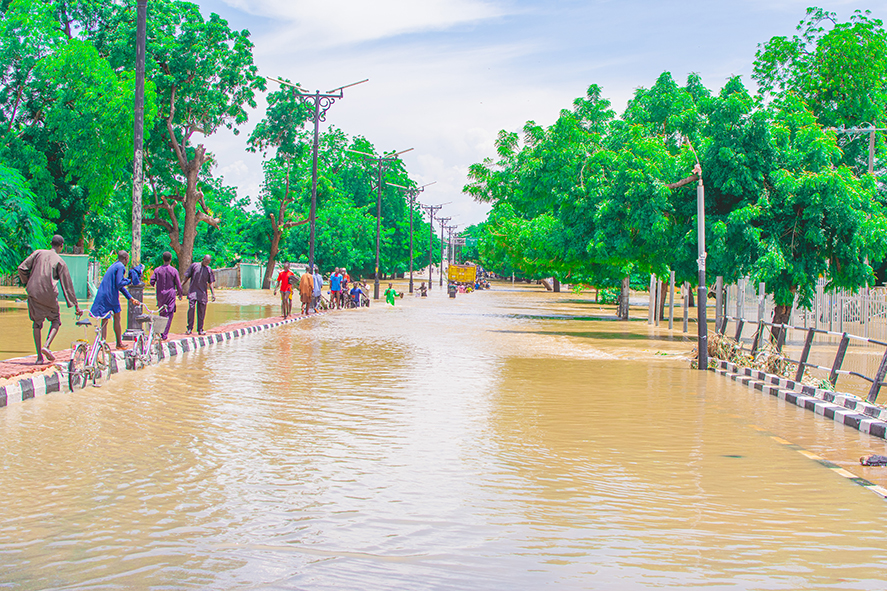
In September 2024, when northeast Nigeria’s Borno State was struck by severe floods after the Alau Dam’s collapse, members of local civilian protection groups sprang into action. Supported by Center for Civilians in Conflict (CIVIC), these volunteers mobilized immediately, navigating familiar landscapes to rescue individuals and families, guide them to safer locations, and provide them with immediate available relief.
As the crisis unfolded, the Civilians Protection Committees (CPC) used their skills, originally honed to protect civilians in conflict, to address the new threat posed by flooding. The volunteers prioritized the evacuation of vulnerable individuals, including pregnant women, children, the elderly, and people with disabilities.
With limited resources, they provided relief items such as food, water, mattresses, clothes, and cooking utensils. Some volunteers even opened their homes to displaced families, inspiring others in their communities to follow suit.
In coordination with local police and authorities, the CPC volunteers helped transport affected families to temporary shelters. Their access to remote, flood-stricken areas also allowed them to assess the scope of the disaster, often before larger humanitarian organizations arrived.
By equipping local groups with protection skills, we’re not only enhancing their safety in times of conflict but also empowering them to respond to climate shocks,” said Saratu Pindar, CIVIC’s Program Coordinator in Nigeria
The CPC’s established connections with local authorities and the military enabled also efficient coordination of relief efforts, which proved essential in the chaotic aftermath of the disaster. Besides rescuing those trapped in their homes, they worked together to recover the corpses of those who died in the floods and dialogued with their communities to encourage temporary support for displaced families and inviduals from nearby areas.
CIVIC trained us to identify protection risks and devise local solutions,” said Fatima Mohammed, a CPC member from Njimtilo, to our staff during a visit a few weeks after the floods. “Seeing the flood’s impact on infrastructure and civilians, we recognized it as a serious threat and stepped in with whatever we could.
The rapid mobilization of the CPCs to address the flooding in Borno state underscored a powerful truth: local communities are always the first responders in times of crisis. Their response highlighted how skills developed to protect civilians from conflict can be just as vital in natural disasters and climate related shocks.
Their swift action and adaptability showed that community resilience, when paired with specialized training, can be an invaluable asset in safeguarding lives, no matter the type of threat, providing the agency for communities to contribute to the protection of their communities as agents of their protection.
The recent floods in Borno State, northeast Nigeria, underscore the urgent need to support communities facing the dual threat of conflict and climate change,
said Saratu Pindar, CIVIC’s Program Coordinator in Nigeria.
By equipping local groups with protection skills, we’re not only enhancing their safety in times of conflict but also empowering them to respond to climate shocks. This resilience within communities is crucial for saving lives and rebuilding in the wake of natural disasters.
Since its founding, CIVIC has collaborated with communities affected by conflict, helping them create self-protection strategies. We’ve witnessed the power of local communities to devise solutions for their own safety. However, they cannot do it alone; sustained support is vital. Investing in local capacity and resilience to prepare for and respond to emergencies —whether outbreaks of violence or climate-related shocks—is essential to protecting lives.
The September floods in Northeast Nigeria affected over one million people, displacing about 400,000 and devastating homes, essential infrastructure already weakend by years of bombardment from the conflict, and destroying cultivated farmlands. This crisis highlights the critical need for community-based responses and protections in the face of mounting climate challenges.
Since 2018, Center for Civilians in Conflict (CIVIC) has engaged with communities, the military, and community militias in the northeast to improve the protection of civilians. Recognizing that civilians are the best agents of their own protection, CIVIC supports civilians to advocate for their protection, including with state and non-state security forces. In parallel, CIVIC provides training and advice to Nigerian security forces to further their efforts to better protect civilians.