By Alex Grif, CIVIC’s Director for Eurasia. Former CIVIC’s Country Director in Ukraine, 2022-2025
A dangerous shift is underway in modern conflict: attacks on civilian infrastructure are becoming routine. From Ukraine to the Middle East, energy systems, water networks, and urban services are increasingly treated as legitimate targets by parties to conflict, despite the widespread harm they inflict on civilians.
Recent developments underscore how far this shift has progressed. Last month, U.S. President Trump threatened to “obliterate” Iran’s power plants if the country didn’t open the Strait of Hormuz within 48 hours, and later suggested targeting bridges, railways, and even “a whole civilization.” Such rhetoric reflects a troubling disregard for civilian life and risks normalizing targeting practices that could amount to serious violations of international humanitarian law (IHL). Attacks directed at civilian objects, carried out indiscriminately, or expected to cause civilian harm excessive to the concrete and direct military advantage anticipated would be unlawful.
I spent the last four years working on protection of civilians in Ukraine as Country Director at Center for Civilians in Conflict (CIVIC). I have seen what the targeting of critical national infrastructure does to civilian life such as depriving hundreds of thousands of people of water, heating, and electricity in freezing temperatures. I have also seen how the war in Ukraine normalized this harm, allowing it to harden into practice.
The war in Ukraine should have been a warning, a moment that triggered renewed effort to restore restraint. Instead, attacks on the systems civilians depend on have become increasingly accepted.
The renewed attention to the risks of targeting of key infrastructure and civilian areas in the current U.S.-Israel-Iran war is justified. But it is a mistake to treat this as a sudden departure. What we are seeing is the culmination of years of growing permissiveness: an expansion of what states are prepared to strike, how far they are willing to stretch military necessity, and how much civilian suffering they are prepared to absorb in exchange for often marginal military gain.
Ukraine Was the Warning
Ukraine demonstrated at scale that attacks on infrastructure do not stop at the point of impact – they cascade. And their effects are not abstract. In Ukraine, Russian drones continue to strike apartment buildings and energy facilities, depriving civilians of their homes, power, and degrading their access to essential services, including healthcare access.
This should have prompted a more serious debate among states—not only about what is legally permissible in narrow terms, but about what is operationally and strategically defensible when civilian impacts are so extensive and foreseeable. Instead, too many treated Ukraine as an exception rather than a warning that the scope of targeting was expanding faster than the rules and restraints meant to contain it.
Research on civilian harm mitigation in Ukraine has underscored exactly this point: large-scale combat operations place immense pressure on restraint unless mitigation is explicitly integrated into planning and backed by senior military leadership.
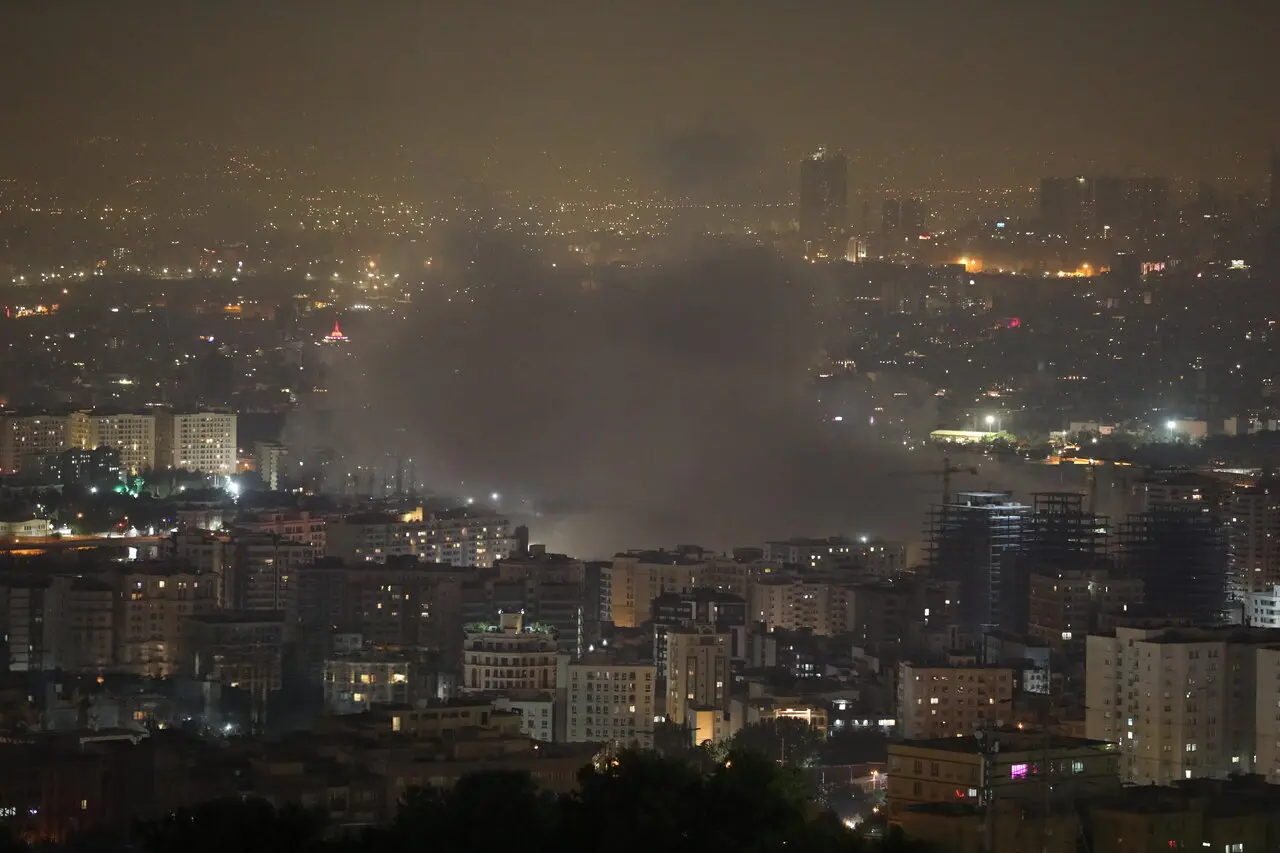
Recent examples reinforce the trend. Israel’s strike on Iran’s South Pars gas field and adjacent Asaluyeh processing hub hit infrastructure that supplies most of Iran’s domestic gas, including energy used for heating, cooking, and electricity generation. In retaliation, Iran targeted Gulf energy infrastructure, including facilities in Qatar and Saudi Arabia, widening the circle of risk still further. These are not isolated tactical choices. They reflect a broader pattern in which infrastructure essential to civilian life is increasingly treated as a legitimate target once a military rationale can be asserted.
Lawfulness Is Not Enough
Under IHL, parties to conflict must distinguish between civilians and combatants, and between civilian objects and military objectives, avoid disproportionate harm, and take all feasible precautions to minimize civilian harm.
To be clear, not all dual-use infrastructure is immune from attack. Energy nodes, transportation links, and communications systems can in some circumstances contribute to military operations. The issue is not whether such infrastructure can ever be targeted; it is whether states have become too willing to do so where the expected military advantage is indirect, speculative, marginal, while the reverberating civilian effects are severe and foreseeable.
Ukraine marked an inflection point in this regard. The real shift has been in how these trade-offs are assessed in practice. Established principles of proportionality and precautions require that reverberating effects be considered when they are reasonably foreseeable. Yet in practice, these effects are often discounted.
Research on explosive weapons and urban environments has long shown that attacks on upstream infrastructure can disrupt entire service networks and affect large populations over time. The Political Declaration on Explosive Weapons in Populated Areas reflects growing recognition that civilian harm cannot be assessed only at the point of impact.
But this recognition has not translated into meaningful restraint yet. Instead, a gradual drift has taken hold: legal justifications have stretched, humanitarian consequences have been treated as secondary, and operational success has been defined narrowly enough that the destruction of civilian-supporting systems is easier to accept than to prevent. This normalization did not remain confined to Ukraine, and instead helped shape the broader trajectory of modern conflict.
The result is the world we are in now.
We should condemn attacks on civilian areas and infrastructure in the Middle East today. But we should also recognize that this is not the failure of single state or one military campaign. It reflects a broader failure by states to confront where targeting practice were heading and to act before those practices hardened into precedent. The current alarm is justified. It is also overdue.
What States and Militaries Should Do Now
What is needed now is not another abstract reaffirmation of principles, but practical restraint. A realistic next step would be for a coalition of states – building on initiatives such as ICRC’s ‘’ – to pursue an immediate reciprocal moratorium on attacks against energy, water, sanitation, and other civilian-sustaining infrastructure. This should be paired with a requirement that military planners explicitly assess reverberating civilian effects before approving strikes on dual-use systems
Such measures would not resolve the broader problem. But they would begin to restore a line that has been eroding in plain sight. If states fail to act, the scope of targeting will continue to expand, and civilians will continue to bear the cost of collective failure that years in the making.
Image courtesy of Mohammadjavad Alikhani