By Pia Siebert
From March 15 to May 6, the United States conducted over 1,000 airstrikes on Yemen, reportedly killing 224 civilians and severely damaging infrastructure. The attack on the Ras Isa Port in Hodeidah alone reportedly caused 84 civilian deaths and 150 injuries as well as significant damage to civilian infrastructure. Airwars and Center for Civilians in Conflict have attributed the reportedly high levels of civilian harm to the use of explosive weapons in populated areas. The damage to civilian infrastructure – including to the port that facilitates the entry of fuel and humanitarian aid – is likely to compound the already devastating and long-term humanitarian impacts of conflict in Yemen.
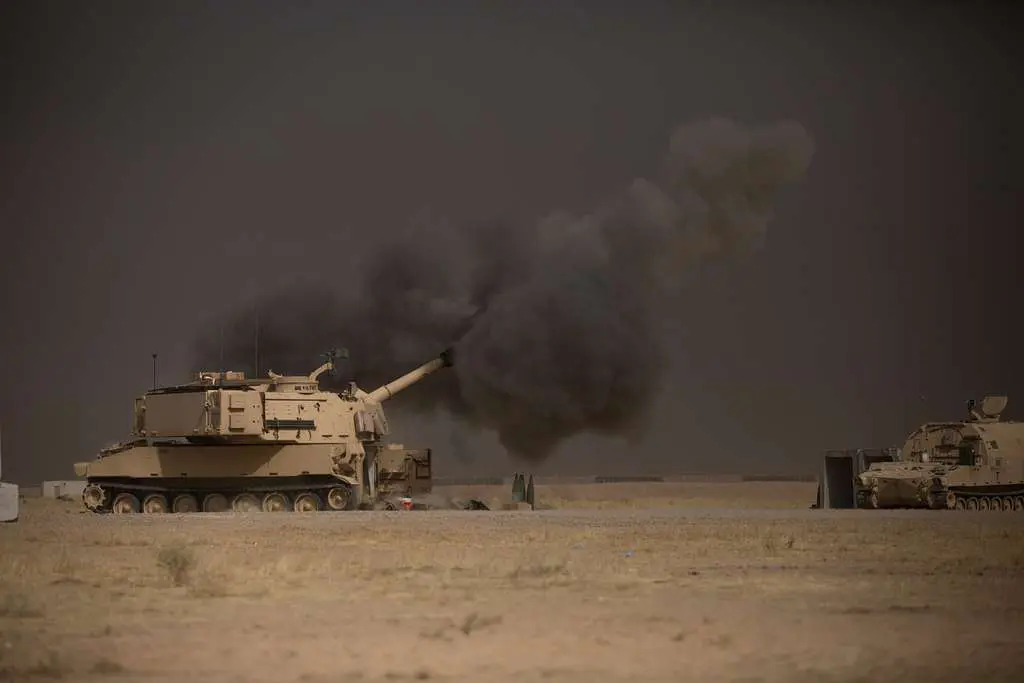
The United States’ use of explosive weapons in populated areas is not unique to Yemen. The New York Times 2021 “Civilian Casualty Files” sparked broader public criticism of US military operations harming civilians in Iraq, Syria and Afghanistan – including with explosive weapons in densely populated urban centers like Mosul, Raqqa, and Kabul.
As armed conflicts increasingly take place in urban areas, it is the civilian population that suffers disproportionately. Explosive weapons, particularly those with wide area effects, often cause harm beyond military objectives, damaging housing and essential civilian infrastructure, such as hospitals, schools, and power and water systems. Attacks in urban areas using these weapons have a long-term impact on civilian life, resulting in reverberating effects such as deterioration of physical and mental health, loss of homes and business, lack of access to shelter and services as well as loss of employment and income. While some treaties ban certain explosive weapons such as landmines and cluster munitions, the law regulating warfare – international humanitarian law (IHL) or law of armed conflict (LOAC) – does not prohibit explosive weapons as such. Instead, their use is subject to the general principles of distinction, proportionality, and precaution, among other rules of IHL. Those principles, however, remain open to interpretation. They leave (too) much discretion to armed actors, which have historically failed to sufficiently protect civilians in urban warfare.
To minimize civilian harm resulting from the use of explosive weapons, 88 states, among them the United States, have endorsed the Political Declaration on Strengthening the Protection of Civilians from the Humanitarian Consequences Arising from the Use of Explosive Weapons in Populated Areas (Political Declaration on Explosive Weapons in Populated Areas), adopted on November 18, 2022. The Political Declaration on Explosive Weapons in Populated Areas is not legally binding but contains political commitments related to domestic policy as well as international cooperation and dissemination.
Implementation of the Declaration is especially important for the United States to protect civilians from its military operations. Not only does the US military continue to use explosive weapons in populated areas, it is also, by far, the largest arms exporter worldwide, including to States who cause vast civilian harm with explosive weapons. But US implementation of the Political Declaration on Explosive Weapons in Populated Areas to date is insufficient. Even though the US has taken significant steps forward through the adoption of new civilian harm mitigation and response policy, gaps persist. Furthermore, the Trump administration is reportedly aiming to dismantle these efforts.
To what extent does current US policy implement the commitments of the Political Declaration on Explosive Weapons in Populated Areas? What gaps still exist and how can it be improved?
Shared Principles, Separate Processes, Different Results
Recent US policy developments are a reaction to incidents of civilian harm caused by explosive weapons in populated areas, but those policies were developed independently from the Political Declaration on Explosive Weapons in Populated Areas. In 2021, the New York Times “Civilian Casualty Files” and further reporting exposed the military’s flawed targeting practices leading to high numbers of civilian harm in Syria, Iraq and Afghanistan and the failure to adequately investigate or acknowledge those incidents. On August 25, 2022 the Department of Defense published the Civilian Harm Mitigation and Response Action Plan (CHMR-AP) which overhauls US policies around preventing, mitigating, and responding to civilian harm resulting from US military operations. The CHMR-AP mandated the establishment of the Civilian Protection Center of Excellence (CPCOE), which Congress codified in December 2022. The Department of Defense Instruction on Civilian Harm Mitigation and Response (DoDI 3000.17), adopted on December 23, 2023, spells out the civilian harm mitigation and response policy, assigns responsibilities and provides procedures for civilian harm mitigation and response, thereby implementing the Political Declaration on Explosive Weapons in Populated Areas, the simultaneous development of these two sets of commitments through parallel but separate processes did not mean that the Defense Department implemented the Political Declaration on Explosive Weapons in Populated Areas. Instead, the US stated that military policy and practice existing as of 2022 already reflects the Declaration’s commitments. It thus missed the opportunity to recognize the use of explosive weapons in populated areas as a problem and issue guidance on how to fully implement the commitments of the Declaration into its new civilian harm policies.
Indirect Implementation
The use of explosive weapons in populated areas is not directly referenced in DoDI 3000.17, published the year after the United States endorsed the Political Declaration on Explosive Weapons in Populated Area. Still, the policy marks a step in the right direction since it deals with the problem of the use of explosive weapons in populated areas indirectly. DoDI 3000.17 prescribes that the Department of Defense must enhance “battlespace awareness of civilian population density, demographics, and dynamics” and identify “capability improvements that further enable the discriminate use of force.” This information gathering and capacity building is necessary for the implementation of the Declaration’s core sections.
US policy also at least partially implements the victim-assistance provision of the Political Declaration on Explosive Weapons in Populated Areas as part of its efforts to respond to civilian harm. Under US law and policy, while Commanders are required to investigate civilian harm, they are only encouraged to provide a response to civilian harm. Response to civilian harm can include condolence payments, repairs to infrastructure, or explosive ordnance removal. To that end, the Department of Defense mandated the creation of organizational units responsible for conducting civilian harm assessments and responses. If fully implemented, current US policy would be a good first step towards fulfilling the commitments of this section of the Political Declaration on Explosive Weapons in Populated Areas. However, as of November 2024, the Department of Defense was behind schedule in implementing its own action plan. With respect to civilian harm response, the Department is currently developing overarching institutional frameworks, but has largely failed to issue ex gratia payments or other tangible responses to victims and survivors of its operations.
Persisting Gaps in US Policy
Despite overlap between US civilian harm response efforts and the Declaration’s victim-assistance provisions, US policy neglects other important commitments of the Political Declaration on Explosive Weapons in Populated Areas. For instance, the United States has not indicated how it plans to implement the Declaration’s core commitment to restrict and refrain from the use of explosive weapons to avoid civilian harm when operating in populated areas. It had signalled its opposition to the core provision during the negotiations by calling it not feasible or realistic in combat.
Beyond that, the Political Declaration on Explosive Weapons in Populated Areas commits States to take into account the reasonably foreseeable indirect effects of the use of explosive weapons on civilians and civilian objects in the planning and execution of attacks. Yet the US Department of Defense has not fully incorporated indirect effects of explosive weapons into its own policy definition of civilian harm. The US policy DoDI 3000.17 only includes “adverse effects” on the civilian population beyond direct civilian casualties and damage to or destruction of civilian objects “to the extent practicable.”
What the US includes in its definition of civilian harm matters because it indicates what the military will include in assessments of proportionality in its operations. Under the IHL principle of proportionality an attack is unlawful if the foreseeable civilian harm is excessive in relation to the concrete and direct military advantage anticipated. The US holds the (minority) view that foreseeable civilian harm does not encompass indirect or reverberating effects under IHL, meaning that the US policy definition goes further than the US interpretation of the law, but still falls short of the commitment contained in the Political Declaration on Explosive Weapons in Populated Areas it endorsed.
While the difference seems small, it can have real-world implications on civilians. That “adverse effects” are only considered “to the extent practicable” means that commanders do not have to take into account all foreseeable indirect effects of an attack. They might decide to exclude indirect effects where inconvenient for the goal of specific military operations and thereby risk civilian lives and livelihoods which the Political Declaration on Explosive Weapons in Populated Areas intends to protect. For instance, attacks which damage water systems may have significant foreseeable indirect effects such as displacement, starvation, and epidemics (especially water-borne diseases) which need to be taken into account to assess the impact on civilians.
These examples show that existing military policy and practice does not already reflect the Declaration’s commitments. The Explosive Weapons Monitor and several humanitarian and international organizations have criticized that some States maintain “their existing policies and practices are sufficient,” highlighting that implementation “is a continuous process of improvement rather than a tick-box exercise.”
For the Declaration’s success, it is crucial to “build a culture for implementation.” Going forward, the United States should, (1) recognize that the use of explosive weapons in populated areas represents a major problem for civilian protection and (2) use its existing domestic lessons learned processes to issue guidance for the implementation of the Political Declaration on Explosive Weapons in Populated Areas. To close existing gaps, the US should start by building good policies and practices on restricting or refraining from using explosive weapons in populated areas, by including foreseeable indirect effect into the policy definition of civilian harm, and by promoting a culture of collective learning on the domestic as well as on the international stage, including at the second review conference in Costa Rica in November 2025.
Hesitance to Engage Openly with De Facto Monitoring Mechanism
The Political Declaration on Explosive Weapons in Populated Areas did not establish a formal implementation mechanism. However, to ensure the implementation and universalization of the Declaration and ultimately, the protection of civilians, NGOs, under the umbrella of International Network on Explosive Weapons, have established the de facto implementation mechanism – the Explosive Weapons Monitor.
For its 2023 Annual Report, the Explosive Weapons Monitor contacted all endorsing States with a questionnaire regarding their implementation progress. Out of more than 80 endorsing States at the time, only 17 responded. While the United States was among them, its responses did not appear to reflect substantive engagement with the new commitments enshrined in the Declaration, instead considering commitments already covered by existing policy.
The United States reported that it had disseminated the Declaration amid government stakeholders before its formal endorsement, nominated a focal point, planned for further domestic implementation, and conducted briefings, workshops, and trainings. However, the United States effectively declined to name specific remaining challenges and necessary policy changes. This month, the United States should respond to the new questionnaire – due on June 30 – in greater detail.
The Future of Implementation of the Political Declaration on Explosive Weapons in Populated Areas
Since the inauguration of President Trump on January 20, 2025, many of the US efforts cited above are at risk of being dismantled. The Trump administration – in its first months – has reportedly made efforts to disestablish the civilian protection hub, the CPCOE, despite legislative protection. The administration has also reportedly terminated or plans to terminate positions and offices working on the implementation of the CHMR-AP and the DoDI 3000.17 – the two core policies designed to mitigate and respond to civilian harm caused by US military operations. Should these plans proceed despite wide–ranging concerns from the military and national security community, the United States will undo much of its previous efforts to prevent harm to civilians from its operations, including from explosive weapons.
Beyond that, the administration effectively dismantled the US Agency for International Development and paused or ended programs on humanitarian aid and mine clearance. Therefore, the US reversed the implementation of the Declaration’s important sections on victim-assistance and clearing explosive remnants of war.
US policy efforts to mitigate civilian harm overlap with the political commitments of the Political Declaration on Explosive Weapons in Populated Areas. In that sense, the DoDI 3000.17 and the CHMR-AP implement parts of the Declaration. However, important gaps persist. On the domestic stage, the United States should start by fully implementing its own policy. Besides, going forward, the US should adopt a holistic perspective, acknowledge the use of explosive weapons in populated areas as a problem and report transparently and in good faith on its efforts to implement the Political Declaration on Explosive Weapons in Populated Areas. An important next step would be to implement these commitments in past and future strikes including in Yemen – to acknowledge civilian harm publicly, offer compensation or other amends, and take the lessons learned process seriously to prevent future civilian harm. The significant cuts to the US civilian mitigation and response program will likely endanger further implementation of the Political Declaration on Explosive Weapons in Populated Areas, and thus civilian lives and livelihoods wherever US military operations take place.
On the international stage, the United States should engage with the de facto monitoring mechanism – the Explosive Weapons Monitor – and contribute to constructive dialogue among states, including during the upcoming second review conference in Costa Rica in November 2025.
Recent events showcase the downside of political declarations and their implementation through domestic policy only. Actions taken to faithfully implement political commitments can easily be undone by an incoming government that can simply decide not to honor its political commitments and rescind policies. Thus, even if such political declarations do not bind states as a matter of international law, it might be advisable to implement their key commitments through domestic law.
Pia Siebert recently completed an internship with CIVIC’s US Program and is now an Advisor at the