By Vanja Kovac CIVIC’s Senior Gender, Inclusion, and Child Protection Advisor
This war in the Middle East has many fronts. Protecting women and children is not one of them.
As the conflict between the US, Iran, and Israel expands, public discourse focuses on deterrence, regional stability, and global economics. But for civilians, war is not high-level strategic discussion—it is a struggle to survive amid compounding risks. And those risks are not evenly distributed.
Understanding this conflict requires asking an uncomfortable question: what and whose harm is recognized, and what and whose harm is systematically ignored? In the first month alone, US and Israeli operations reportedly killed at least 1,443 civilians in Iran, including 217 children. On the first day, an apparent US strike on a girls’ primary school in Minab killed at least 168 children. Updated figures now put the toll even higher: at least 258 women and 221 children were reported killed as of early April 2026. These are not anomalies. They are catastrophic warnings of a failure to protect—and yet even these figures fail to capture the full picture.
Women: direct harm and invisible survival labor
For women, the war brings both direct and indirect harm. Over 60 hospitals were damaged in Iran. At least 55 primary health centers and six hospitals in Lebanon were forced to close. UNFPA estimates that at least 13,500 pregnant women in Lebanon alone have been displaced, and a further 3,100 have fled to overcrowded shelters in Syria that lack adequate sanitation, medicine, or food. As UNFPA’s representative in Lebanon noted: “Pregnant women do not stop giving birth in the middle of conflict.”
In Lebanon, more than 2,100 people have been killed and over 1.2 million displaced since the escalation began on March 2nd according to OCHA. UN Women has confirmed that more than 250 women were killed in just seven weeks, with an estimated 16,750 women and girls forced to flee their homes each day.
Displacement compounds harm in ways that never appear in casualty records. When men are killed or detained, women must absorb both caregiving and livelihood roles on top of their own. UN Women’s reporting from Lebanon documents women tending to the injured, calming frightened children, skipping meals so others can eat—while they themselves are displaced and without income. Nearly 70 percent of those seeking psychosocial support in Lebanese displacement sites are women. These are not side effects of combat. They are the lived reality of this war.
Children: harm beyond the moment of impact
Children are especially vulnerable in armed conflict. Their smaller bodies sustain different and often more severe blast injuries. Their developing immune systems are less resilient. Their dependency on adults and institutions means the collapse of those structures reverberates through every dimension of their lives.
The use of explosive weapons in populated areas is particularly devastating for children. Shrapnel penetrates more deeply through their not yet fully formed tissue; the force of a blast can hurl children into the air, and their shorter stature makes lethal head injuries more likely. Save the Children’s research documents that children are seven times more likely to die from blast injuries than adults. Survivors face long-term physical disability alongside profound psychological harm. Children are also acutely vulnerable to malnutrition: as food systems collapse and displacement disrupts feeding routines, the consequences for physical and cognitive development can be permanent. In this conflict alone, UNICEF reported that within the first ten days, more than 1,100 children had been injured or killed across the region.
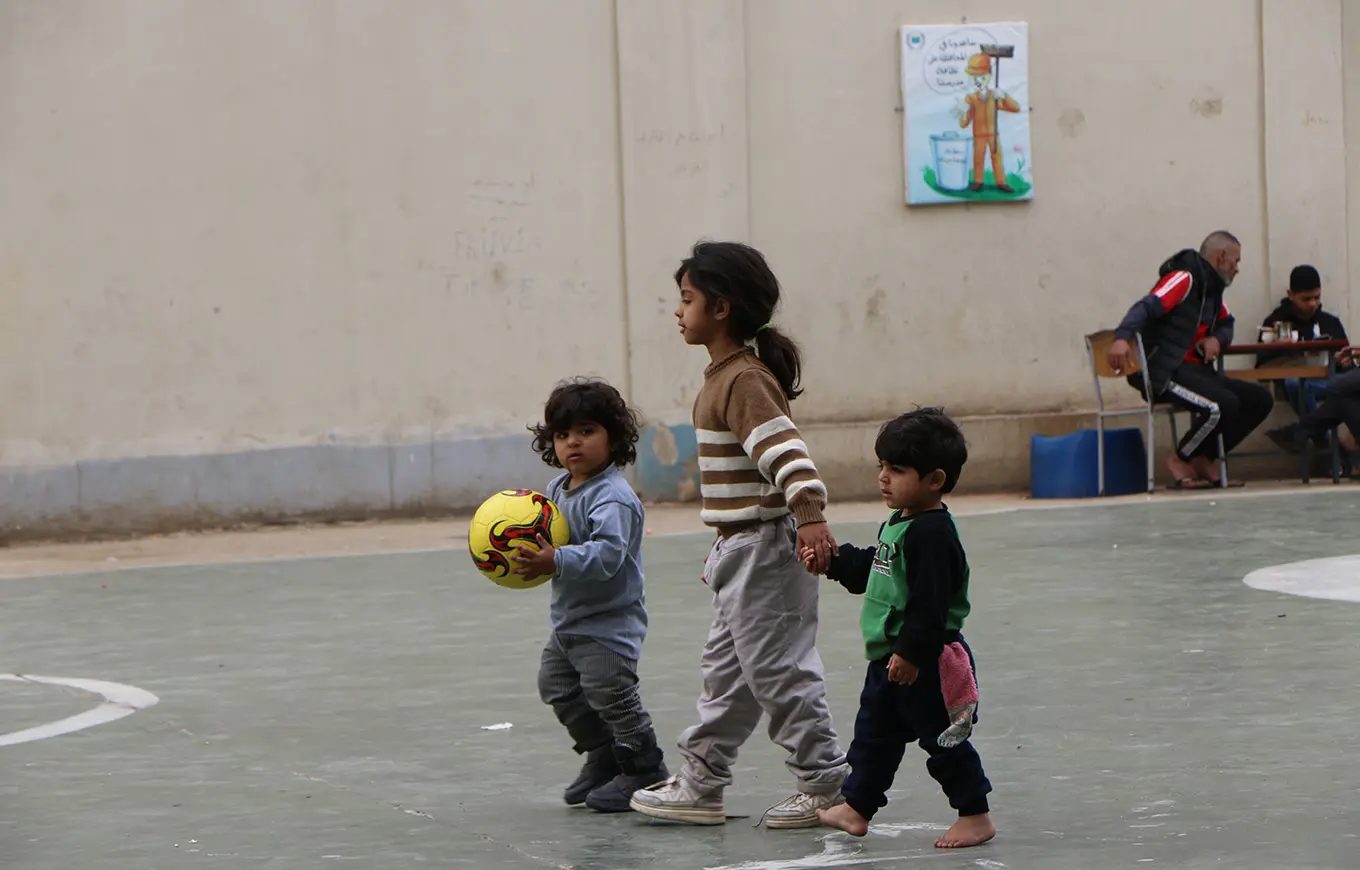
Harm also extends far beyond the moment of impact. At least 44 schools were damaged in Iran and more than 10,000 structures were obliterated in southern Lebanon, collapsing developmental routines across the region. In Lebanon, schools that remain standing have been repurposed as emergency shelters, stripping children of their right to education with no clear timeline for return. Many will be displaced multiple times; some will be orphaned. The psychological trauma of this war will be carried by this generation long after hostilities cease. As one displaced mother described: “You can’t explain to a seven-year-old why the sky suddenly lights up.”
Men: presumed combatants, invisible victims
For men, the risks are different, yet also severe. The use of “military-aged male” as a targeting heuristic means entire demographic groups face elevated lethal risk regardless of their actual role or status. Men’s vulnerabilities are also compounded by domestic repression: in Iran, at least 1,800 arrests have been recorded since the conflict began, many without due process. A detained man disappears from his family’s support structure — his vulnerability is real, but rarely tracked with the same rigor as other forms of harm.
As the conflict widens, protection and accountability take a back seat
What is striking is how little these gendered patterns of harm shape operational assessments. We are witnessing a fragmented war spread across multiple theaters. It is often unclear which actor is responsible for specific strikes. When responsibility becomes diffuse and affected civilians bear the burden of that ambiguity, the most invisible harms become the easiest to ignore.
The unprecedented tempo of operations leaves no space for the gender-sensitive situational understanding that effective protection requires. Substantially enabled by AI targeting systems processing data faster than any human review can follow, the pace of this conflict means operators have no time to establish accurate patterns of civilian life—when children are in school, how restricted mobility shapes where women are and when. When speed becomes the primary operational metric, civilian harm mitigation is the first casualty. The cost falls—as it always does—on the most vulnerable.
Protection partial by design
Harm does not occur in a vacuum. A displaced pregnant woman loses prenatal care. A child pulled from school may never return. A detained man disappears from his family’s support structure. These cascading harms define the civilian experience of this war, and they rarely appear in post-strike assessments.
Effective civilian harm mitigation requires tracking sex- and age-disaggregated data and understanding diverse civilian behaviors. Instead, militaries rely on a simplified picture of the battlefield—presuming adult men are combatants, ignoring women’s caregiving burdens and child-specific vulnerabilities. When these intersectional realities are excluded from the targeting cycle, protection becomes partial by design. Failing to implement gender-sensitive civilian harm mitigation does not just increase civilian suffering—it fundamentally undermines the strategic effectiveness and legal compliance of military operations. The result is the active erosion of protection.
The erosion must be named
For women, this erosion manifests in the invisibility of survival labor. For children, in systemic trauma that outpaces casualty figures. For men, in lethal targeting patterns that remain largely unscrutinized. For all civilians, in the absence of the gender-sensitive understanding that effective protection requires.
INGOs, UN agencies, and donors all have a role to play. Ensuring that gendered civilian harm is tracked, reported, and acted upon—and that armed actors are held to account—is not a niche concern. It is the foundation of any serious commitment to the protection of civilians.
This war has many fronts. For the civilians—the women, men, and children—living through it, their protection tragically does not seem to be one of them.
Image courtesy of : © 2026 UNRWA / Maysoun Mustafa