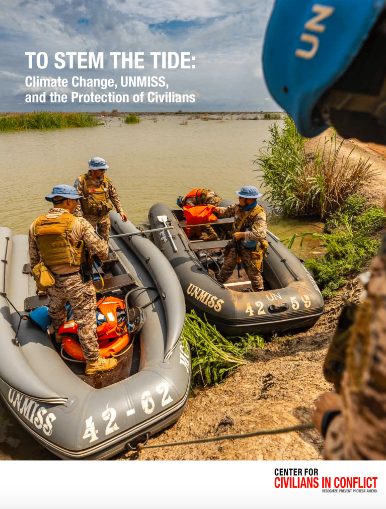
 This policy brief examines the critical intersection between climate change and the protection of civilians in South Sudan, focusing on how the UN Mission in South Sudan (UNMISS) is adapting to these evolving challenges.
As extreme weather events like flooding and drought become more frequent, they exacerbate existing vulnerabilities, contributing to displacement, resource scarcity, and shifts in agricultural patterns. While these climate impacts are not the sole drivers of conflict, they interact with underlying political and economic factors, potentially fueling violence and complicating efforts to safeguard civilians.
The policy brief underscores the need for UNMISS to evolve in response to these climate-related risks to remain effective in its mandate to protect civilians. The UN Security Council has recognized the importance of this adaptation, mandating the Mission in 2023 and 2024 to report on and address climate-related risks.
These mandates encourage the integration of comprehensive risk assessments, community engagement, and resilience-building into the Mission’s operations, reflecting a growing awareness of the importance of climate considerations in peacekeeping efforts.
By exploring how UNMISS is implementing these new climate dimensions, the report provides early insights that could guide other peacekeeping missions facing similar challenges. The analysis covers key aspects such as the integration of climate data in threat assessments, the impact of climate stressors on protection capabilities, and the overall alignment of climate adaptation with the Mission’s Protection of Civilians strategy. These observations aim to inform more effective responses across the UN system to the protection risks exacerbated by climate change in conflict-affected regions.
Read the full brief here.