Madison Hunke, Program Manager for CIVIC’s US Program
The US Department of Defense is reportedly considering significant cuts to offices and programs dedicated to preventing civilian harm from US military operations. But US military leaders, veteran and family organizations, and other national security experts have warned against such cuts, arguing that efforts to mitigate civilian casualties are not only morally imperative, but also critical to US strategic aims and military service member well-being.
Background
The US military has spent years working to improve its ability to prevent and mitigate harm to civilians from its operations, including through the development of DoD Instruction 3000.17 on Civilian Harm Mitigation and Response (CHMR) under the first Trump administration, which was mandated by Congress in 2019 and ultimately published in 2023. The Department further built on these efforts in 2022 by publishing the Civilian Harm Mitigation and Response Action Plan (CHMR-AP) and creating the Civilian Protection Center of Excellence (CPCOE), whose establishment and maintenance was codified by Congress in 2023. In addition to the CPCOE, the CHMR program also employs staff at every combatant command, who advise commanders on key civilian harm issues.
Since the start of the second Trump administration, CHMR efforts – including necessary staffing, offices, and funding across the Department – have come under threat as a result of federal workforce reductions. However, in response to the uncertain fate of the CPCOE and civilian harm mitigation programming more broadly, many voices have emerged to advocate for the preservation of these critical efforts.
Military Leaders: Preventing Civilian Harm is Strategic
Responding to reports of possible cuts to CHMR programs, seasoned military leaders spoke out on the value of these efforts. Retired four-star General Joseph Votel, former Commander of US Central Command (CENTCOM) spoke to NPR’s Morning Edition about the possible cuts and the moral and strategic importance of protecting civilians.
I’ve seen the heartbreaking impact of where things have gone wrong. If you cause so many civilian casualties and you cause so much civilian harm here, it can actually undermine the mission that the military has been sent in to do,” said Votel. “In my view, I think the benefit to be gained by supporting these [CHMR] positions, I think it outweighs the movement of resources to other places.
He added that these offices were created during the first Trump administration as the military sought to learn lessons from its war against the Islamic State in Iraq and Syria.
Retired Brigadier General Matthew Isler, leader of the US Air Force’s counter-ISIS operations in Mosul, Iraq in 2017 similarly touts the benefits of CHMR. In an article on Medium, Isler stated,
Operational effectiveness and limiting civilian harm are two sides of the same coin. Focusing combat effects on the enemy while minimizing risks to civilians accelerates campaign success, preserves combat power, strengthens support at home, protects alliances and partnerships, and protects warfighters. Collectively, these efforts make America stronger and safer.
Isler’s comments echo the arguments posed in an earlier Military Review article he authored with the CPCOE’s former Director, Michael McNerney, on how preventing civilian harm supports operational effectiveness.
US Military Veteran and Family Organizations Weigh In
In June, nine organizations representing thousands of military veterans and their families across the United States wrote to Secretary of Defense Pete Hegseth expressing concern regarding these proposed cuts and urging him to maintain these capabilities, citing how preventing civilian harm upholds military values and protects US troops.
Programs to prevent civilian harm uphold the high standards that make our military the most respected fighting force in the world—ensuring accountability, reducing unintended harm, and further strengthening America’s leadership on the global stage,
wrote the organizations.
The letter was signed by About Face: Veterans Against the War, the Chamberlain Network, CommonDefense.us, Iraq and Afghanistan Veterans of America, Minority Veterans of America, Secure Families Initiative, Service Women’s Action Network, Veterans for American Ideals, and Veterans for Peace.
Gutting these essential programs would not only betray the values our military stands for, but also leave our service members without the tools they need to make informed decisions in complex combat environments,
said Gretchen Klingler, Director of Veterans for American Ideals. “Civilian harm mitigation isn’t a bureaucratic box to check—it’s a strategic, moral, and operational imperative. As a Veteran I understand firsthand the importance of these programs. We urge Secretary Hegseth and the Department of Defense to uphold these bipartisan, battle-tested programs that protect civilians and support those in uniform.”
Dr. Kyleanne Hunter, CEO of Iraq and Afghanistan Veterans of America, noted the importance of these programs for civilians and service members alike.
Preventing civilian harm isn’t just about global respect and accountability; it’s about protecting the health and moral integrity of our service members here at home,” said Dr. Hunter. “Our troops deserve every tool and training to minimize civilian harm, safeguarding not only innocent lives but their own well-being. Maintaining robust Civilian Harm Mitigation and Response programs is a non-negotiable investment in our warfighters, directly mitigating the inevitable moral injuries they face and ensuring they uphold the very values they bravely defend.
DoD Leaders Testify to Congress on Importance of CHMR
Congress has played an important role in shaping and resourcing CHMR efforts over the years, including by mandating the development of the DoD Instruction on Civilian Harm, creating the Civilian Protection Center of Excellence, and other support and oversight through subsequent bipartisan National Defense Authorization Acts. In May 2025, fourteen US Senators wrote to Secretary Hegseth urging him to maintain CHMR programs and reminding the Department of the legal requirements created by Congress.
Members of Congress have also pressed on civilian harm issues during hearings with military leaders, who have reaffirmed the importance of CHMR efforts. In his confirmation hearing, Under Secretary of Defense for Policy Elbridge Colby agreed with Senator Warren (D-MA) that preventing civilian deaths enhances US national security, that commanders are able to make better decisions in the field when they are equipped with training on how to avoid civilian casualties, and that it is important that commanders have legal advice that they can count on and trust. In his Advance Policy Questions, he stated that he believes
it is in the U.S. national interest, as well as morally right, to seek to reduce civilian harm to the degree possible.
In his Advance Policy Question responses, the nominee for the Chairman of the Joint Chiefs of Staff Gen. Dan Caine noted that
the combatant commands see positive impacts from the program,
including the creation of a CHMR workforce, updates to doctrine, and ongoing education and training.
Just this week, the nominee for the next CENTCOM Commander, Vice Admiral Charles Cooper III, communicated his “passion” on the issue of civilian harm mitigation and the threat that civilian harm poses to US national security. He stated, “It risks our credibility and trust and puts our troops at risk.” If confirmed, he committed to ensuring civilian harm mitigation is integrated as “part of [CENTCOM’s] culture.”
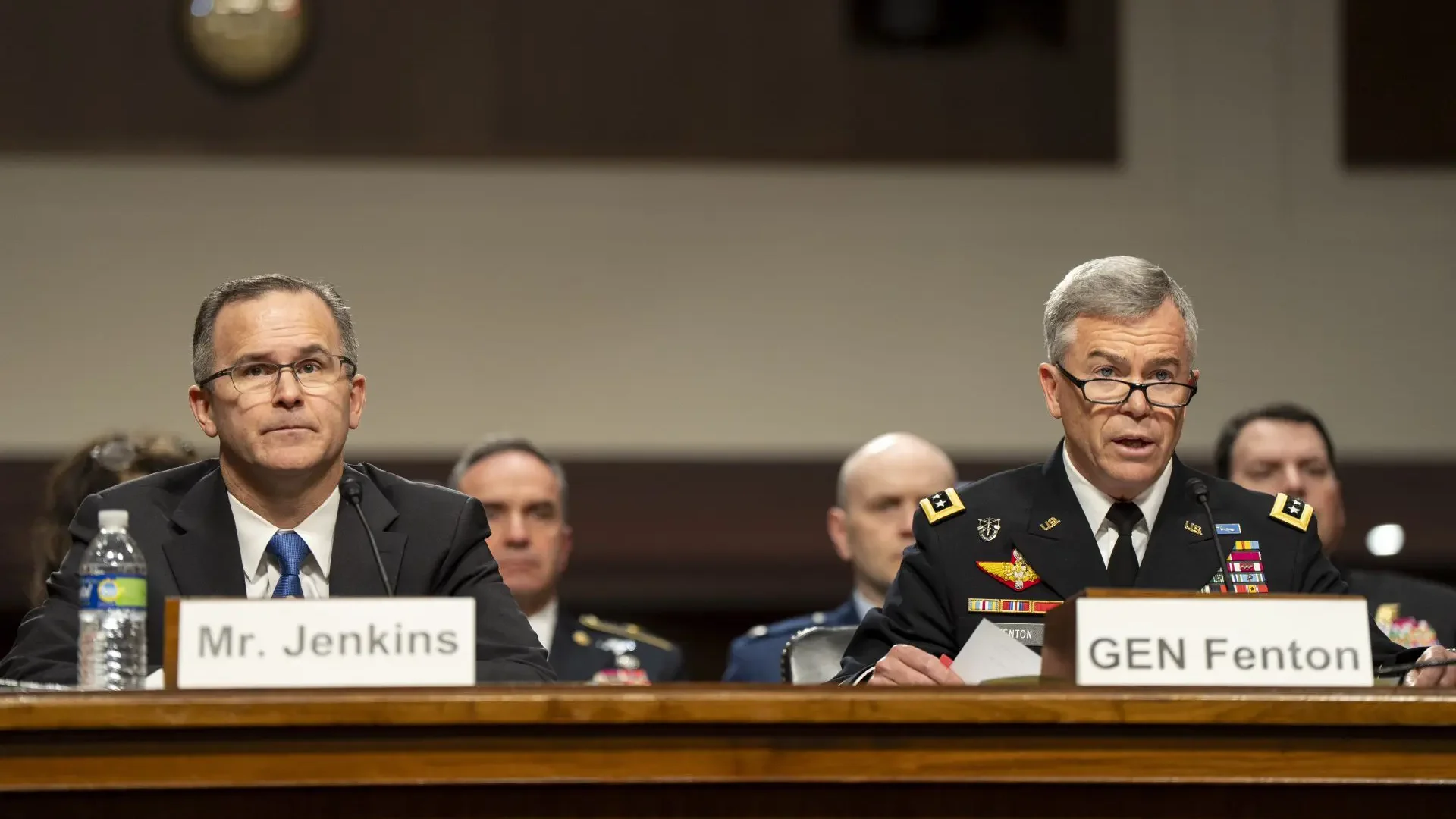
When asked by Senator Reed (D-RI) whether the CPCOE has been an asset to Special Operations Command (SOCOM) operations, SOCOM Commander General Bryan Fenton responded,
Certainly.” He added that protecting civilians is “part of who we are and what we stand for.
These testimonies from men and women who have served in the US Armed Forces and who have seen the destructive impact of civilian harm first hand speak volumes about the importance of maintaining civilian harm mitigation and response initiatives within the DoD.
As Congress negotiates the defense spending bills for Fiscal Year 2026, it is critical to ensure maintenance and resourcing for these programs, offices, and staff. Failing to do so risks losing years of lessons learned and military efforts to develop better tools and trustworthy systems for preventing civilian harm. Civilians and service members alike will suffer for it.
Image courtesy of US Secretary of Defense Public Affairs