By Khrystyna Kozak, CIVIC Researcher in Ukraine
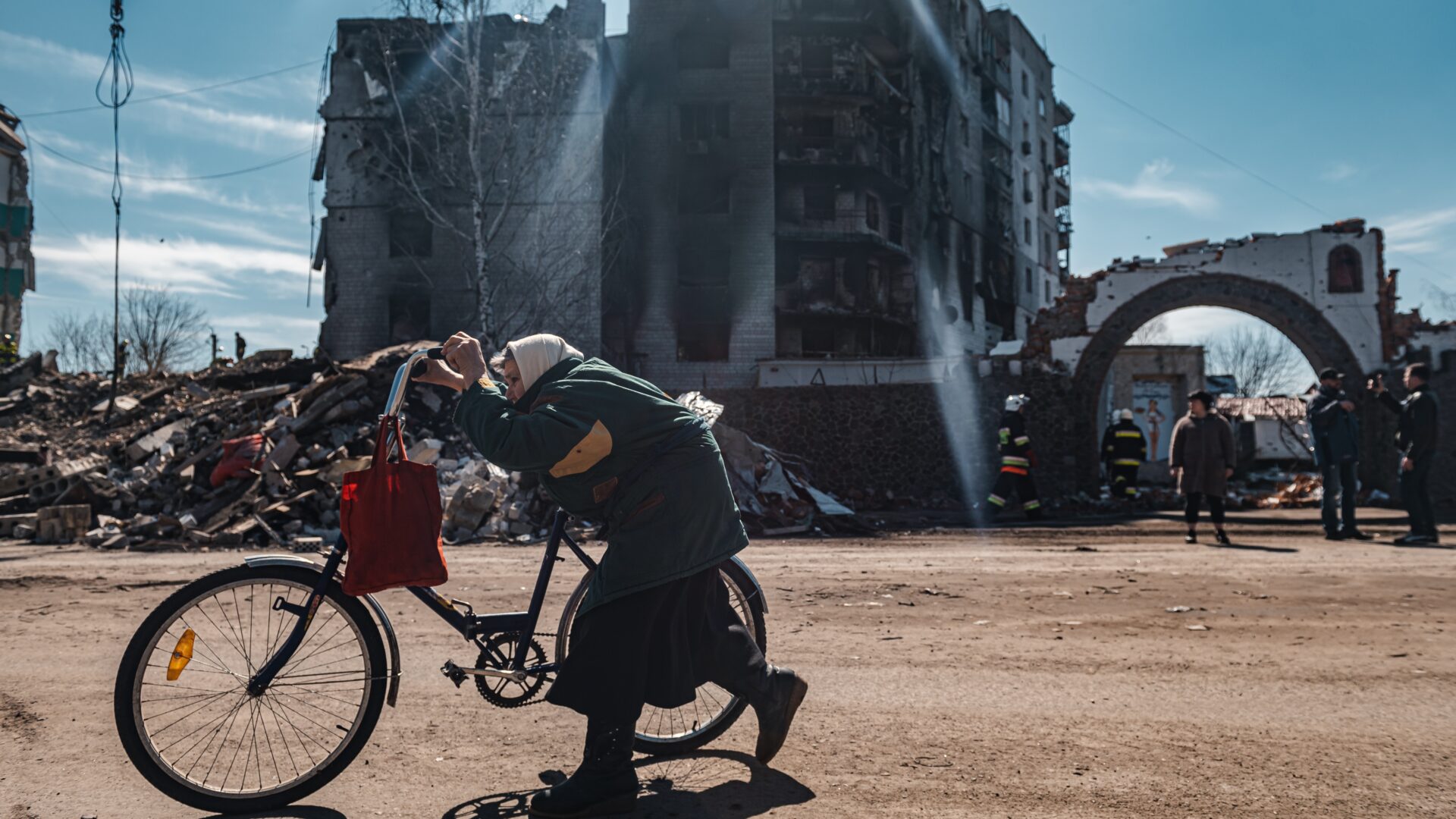
Ukrainian society has demonstrated an extraordinary level of resilience — from the civilians who tried to halt advancing Russian columns barehanded in Kyiv oblast in 2022, to those who endured the harsh winter of 2025–2026 under constant Russian strikes on critical infrastructure, often without water, electricity, or heating.
Test
This article does not attempt to unpack national identity or mentality — though in my view they have played a decisive role in shaping society’s response to Russia’s existential war against Ukraine. Instead, it looks at how systematic work by the state, civil society, and the armed forces can strengthen both personal and societal resilience.
In CIVIC’s recent research on civilian preparedness for escalation, almost 2,500 respondents across five oblasts — Kharkiv, Kherson, Mykolaiv, Sumy, and Poltava — rated their own readiness for escalation at, on average, just 4.7 out of 10.
When I began the study, I expected the score to be much higher, especially in the fifth year of a full-scale invasion in which intensity keeps rising and , but civilians’ preparedness is fading.
Occupation Changes Everything
The CIVIC research compared two groups: hromadas and civilians with experience of occupation, and those without it. Civilians who rated their preparedness at 8–10 were significantly more concentrated in the group with occupation experience. Being prepared is mainly associated with having bags packed, phones charged, and the car ready.
But occupation experience reframes the answer. Those who lived under occupation associated preparedness with longer-term survival — equipped shelters, having stockpiles of food and water — acknowledging that evacuation might not happen immediately, while still naming rapid departure as the primary response.
Occupation fundamentally changes how people think about what they need to survive. It is invisible harm, often understood by external observers as the lesser-evil option for ending the war — but civilians who have lived through it tell a different story.
While most respondents without occupation experience cited intensified drone attacks or the loss of electricity and water as the threats they were preparing for, the dominant response among those with occupation experience was the risk of re-occupation. For them, occupation is itself harmful. They believe a second occupation would be more brutal than the first, and that evacuation must be immediate — without waiting.
“Surviving the occupation is the worst option. Now no one will wait” – Ukrainian civilian
Reliance on the state and local authorities
People who see their local authorities as prepared also rate themselves as more prepared — not out of general optimism, but because institutional readiness shapes individual confidence. Poor communication from local authorities, or solely classified evacuation plans with no alternative public document lower the expectation on the strong and rapid governmental institution response.
Around 90% of respondents say they will rely on themselves in case of escalation — not out of distrust, but because self-reliance offers more independence and speed, and because they understand the government cannot evacuate everyone and should focus on the elderly, people with disabilities, and families with children and no means of transport.
The gap between fear and training
Training emerges as one of the most practical tools for building resilience. Demand among civilians is highest for first aid, mine safety, evacuation procedures, and countering disinformation. Evacuation drills are being conducted regularly in some oblasts with critical-infrastructure workers, but civilians are excluded to avoid panic. When asked, those same civilians say they would welcome being included.
The broader pattern is the same: the government and local authorities try either to solve everything at their level alone, or to deliver positive messaging to civilians, which is understandable. Reassurance that everything will be fine offers necessary hope to people living under harsh conditions, but it should not erode preparedness. The two must be balanced, so that hope does not come at the cost of readiness.
Among the training providers mentioned by respondents, the National Resistance courses stood out as particularly valuable and effective — alongside the State Emergency Service and a number of NGOs. Similar courses are now mandatory for students in Ukraine, and the curriculum reflects basic military training, including IHL, drone use, and survival under occupation and many others.
Civilians in government-controlled areas rated them highly and the system on national resistance has a strong legal ground.
Disinformation is recognised as a direct threat to resilience. People link it to panic, poor decisions, and premature displacement. Yet counter-disinformation training is far less available than other types of training.
CIMIC’s role
In response to this gap, CIMIC officers recently adapted NATO’s seven resilience criteria to Ukrainian realities by adding three more: disinformation resilience, economic resilience, and community (collective) resilience. Under the Law of Ukraine “On Defence of Ukraine”, responsibility for fostering defence awareness and readiness for national resistance among the civilian population lies precisely with CIMIC officers.
At the same time, a significant shift has taken place. Following the 2025 doctrine update, CIMIC officers now spend most of their time on the social accompaniment of combatants killed and injured in action.
In CIVIC’s recent study, veterans were named as the most credible trainers and the main interlocutors with civilians, while CIMIC officers were rarely mentioned, leaving a gap in the CIMIC role for the national resilience.
Resilience plans
On 14 March 2026, President Volodymyr Zelenskyy signed a decree putting into effect the National Security and Defence Council’s decision on resilience plans for Ukrainian cities and oblasts, providing for preparations for the winter of 2026-27. While extremely important, the focus is almost entirely on energy infrastructure.
Adoption of the resilience plans is a huge and correct step forward, it should be retained at both national and local levels, and expanded to cover the other factors that shape resilience: training, communication, counter-disinformation capacity, and community-level preparedness.
A resilient society is decisive in a prolonged international armed conflict. People who have survived occupation are better prepared. They should be seen not just as IDPs if currently displaced, and certainly not as a burden, but as an asset — ready to act in a crisis, already familiar with the drill, and as individuals with lessons to share. Occupation is an invisible harm, one that has been inflicted on so many Ukrainians whose identity is being eroded under occupation every day.