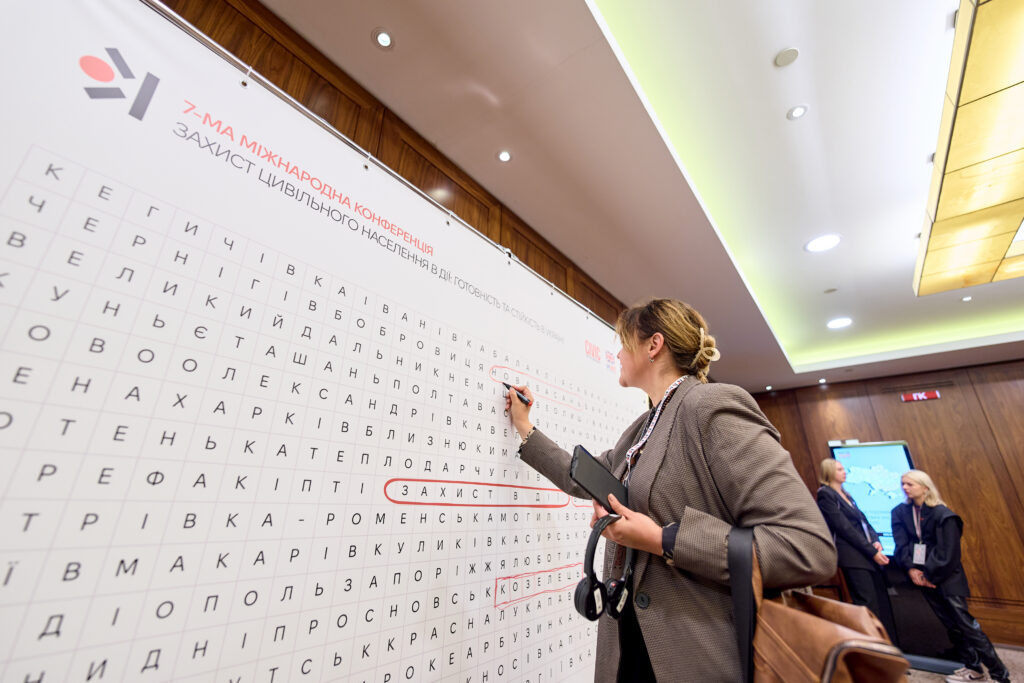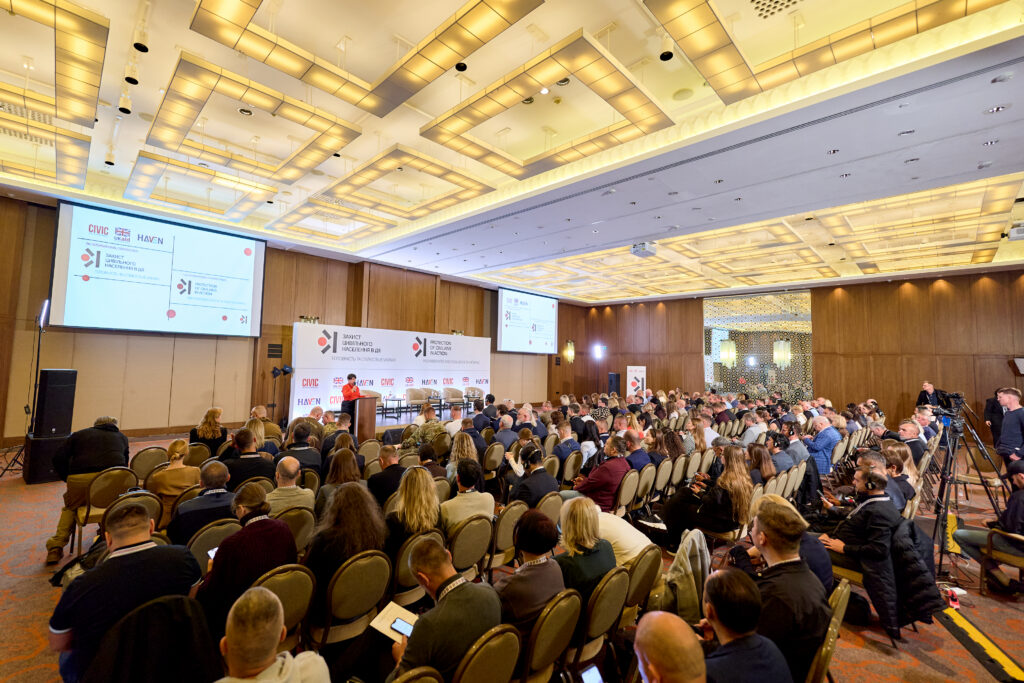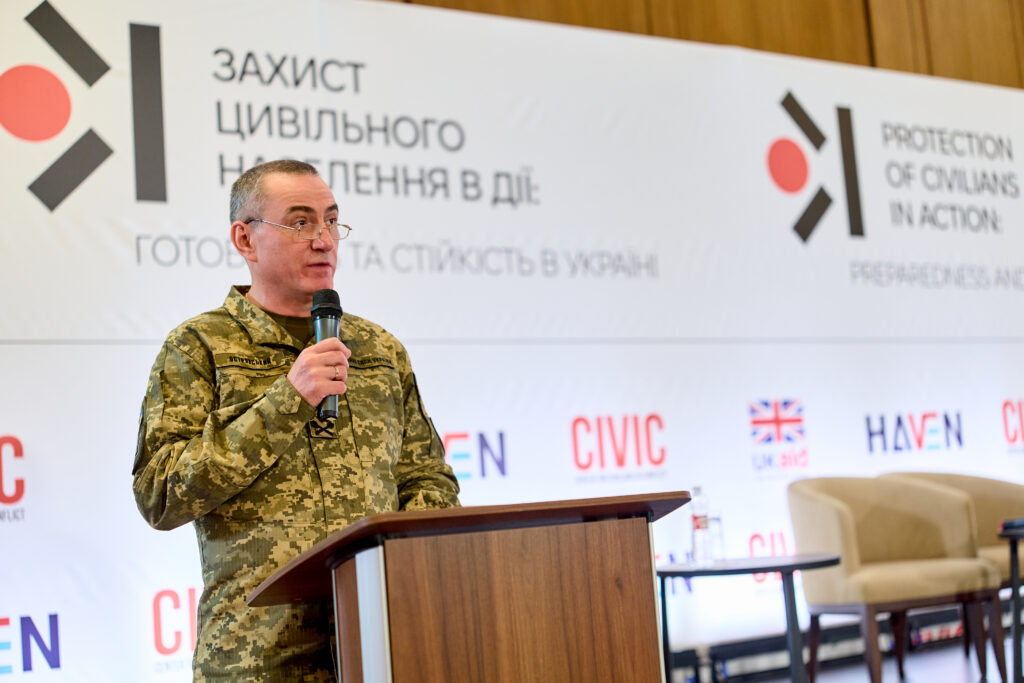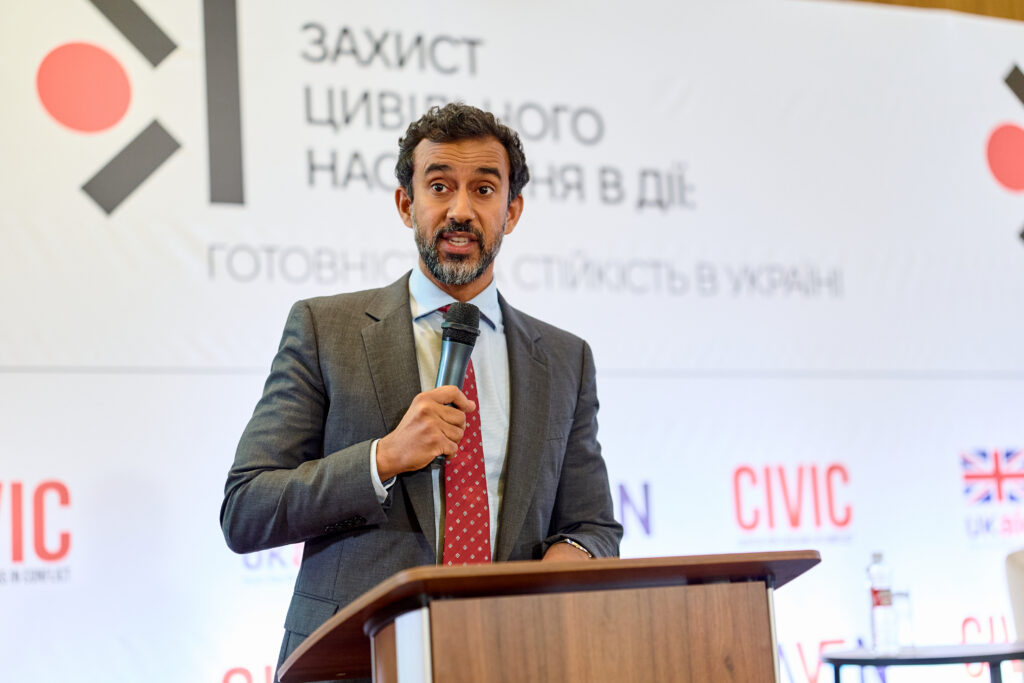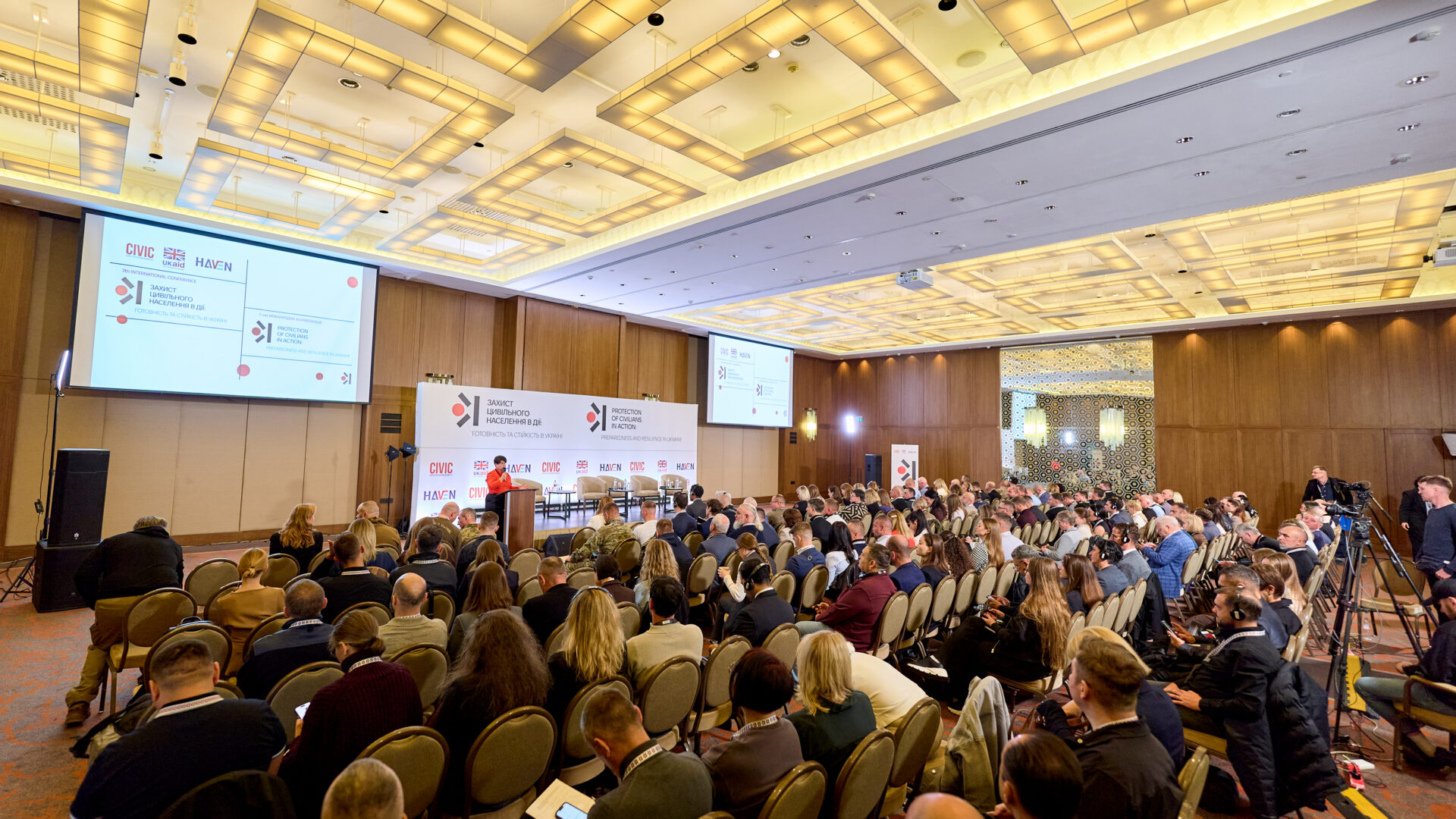
Kyiv, October 7, 2026 – Center for Civilians in Conflict (CIVIC) convened its 7th International Conference, “Protection of Civilians in Action: Preparedness and Resilience in Ukraine,” in Kyiv on October 6, bringing together national and local authorities, security and defense actors, civil society, and community representatives. The conference highlighted how their cooperation is translating preparedness into concrete protection for civilians.
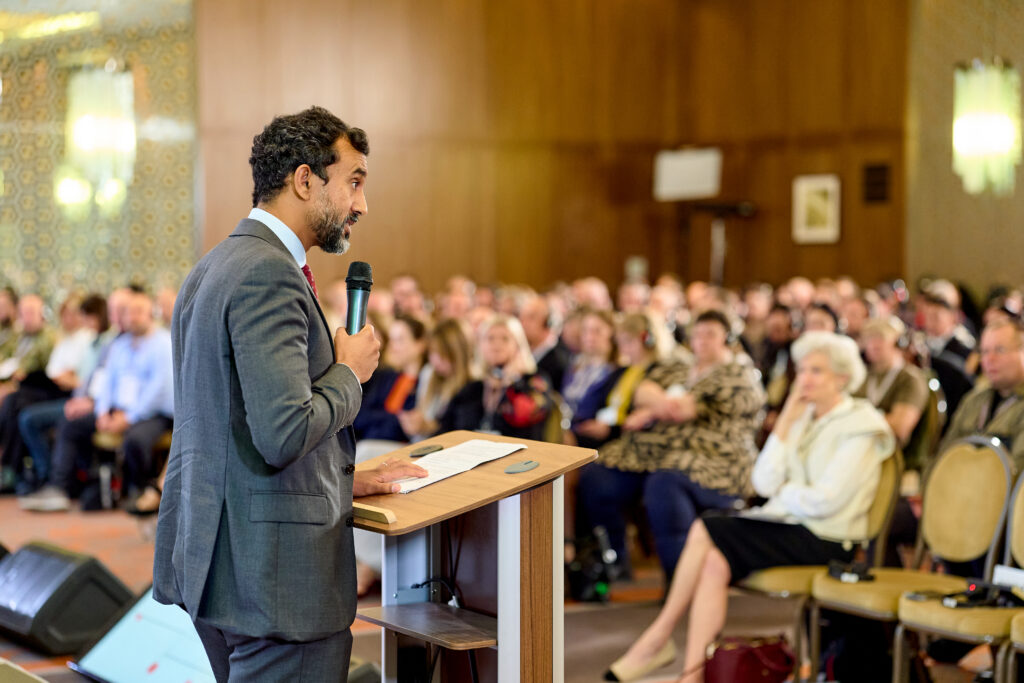
Opening remarks were delivered by Major General Yevhenii Ostrianskyi, Deputy Chief of the General Staff of the Armed Forces of Ukraine; Oksana Hryhorieva, Gender Advisor to the General Staff of the Armed Forces of Ukraine; Tamara Mawhinney, Ambassador Extraordinary and Plenipotentiary of Canada to Ukraine; and Omar Ahmed Abenza, CIVIC’s Director of Global and Field Programs.
Ukraine shows that effective civilian preparedness depends on strong civilian agency and civil-military cooperation, while – said Omar Ahmed Abenza – constantly adapting protection approaches to evolving threats such as drones offering critical lessons for Europe and NATO.
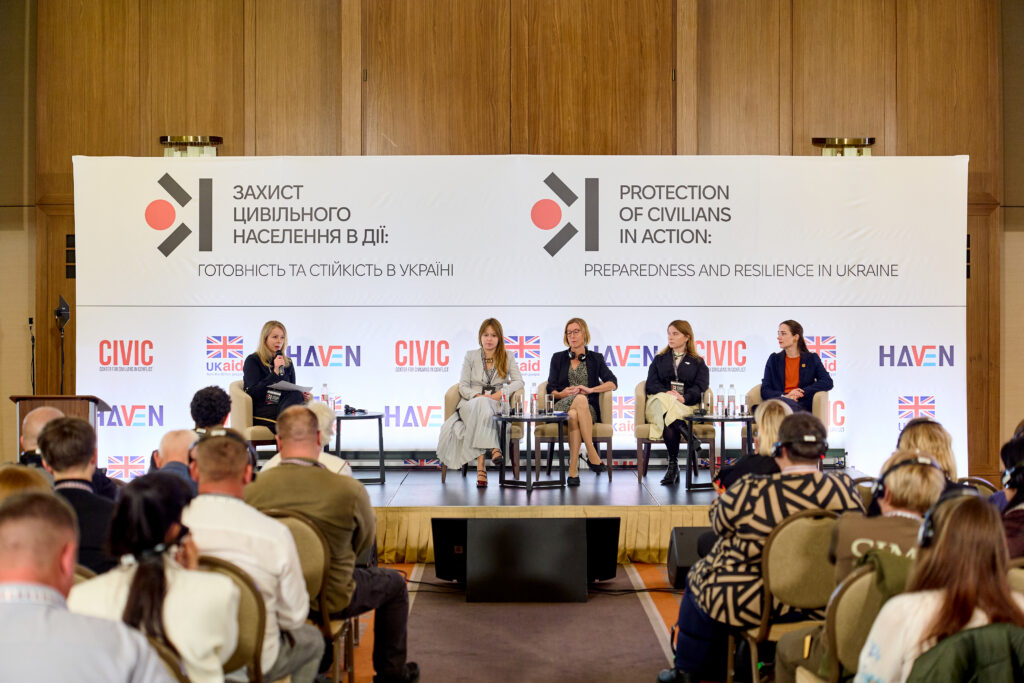
The first panel considered both the strengths and the limits of resilience. Moderated by CIVIC Ukraine Country Director Joanne La Terriere, the discussion featured Katrin Buchholz, Deputy German Ambassador; Yuliia Chykolba, Country Director of the Centre for Information Resilience; Oleksandra Matviichuk, Head of the Center for Civil Liberties; and Yelyzaveta Yasko, Member of the Ukrainian Parliament.
Participants stressed that civilian agency and civil-military cooperation are essential to preparedness. Communities need a meaningful role in identifying risks, shaping plans, and exercising alongside authorities and security actors. That participation must not militarize civilians or allow institutions to transfer their responsibility for civilian protection onto communities.
Resilience should not become a justification for transferring responsibility from institutions onto civilians. The purpose – said Joanne La Terriere – of preparedness should not be to make civilians better at absorbing harm. It should be to reduce the harm they have to absorb in the first place.
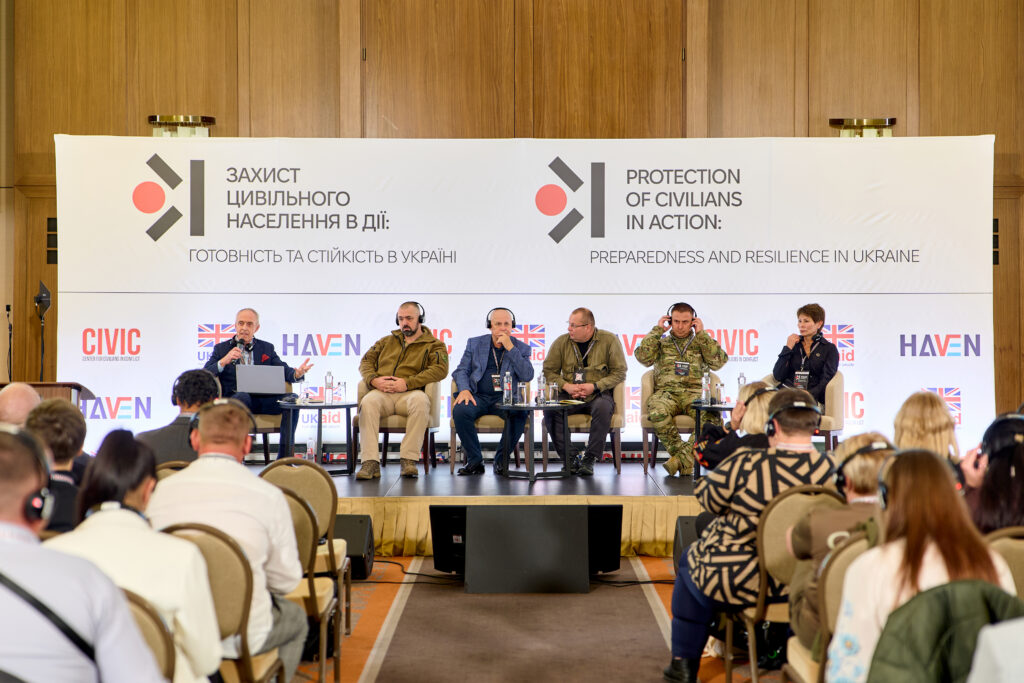
A second panel, moderated by CIVIC Military Advisor Stephen Kilpatrick, examined operational cooperation among Ukraine’s security and defense forces, local authorities, emergency services, police, civil society, and communities. A third panel, moderated by CIVIC Senior Protection Officer Mariana Barchuk-Halyk, focused on how local knowledge and trusted relationships improve preparedness and produce practical responses to changing security risks.
The final session examined how drones are fundamentally reshaping the civilian protection environment. Rapid technological change and increasingly short warning times are creating new risks for civilians, while drones can also support protection, assistance, and emergency response. Participants emphasized that preparedness measures must adapt continuously, even as practitioners are still determining which approaches provide the most effective protection.
The discussions established a clear direction for civilian preparedness: anticipate threats, connect institutions and communities, build trust in information and response systems, and adapt as technology changes. Civilians must remain at the center of these decisions and have a meaningful role in preparedness, without being asked to carry responsibilities that belong to public institutions.
For more information or to arrange an interview
Global CIVIC Communications: [email protected]
In Kyiv: Communications Manager, Liudmyla Gitsevych, +380 96 737 7810, [email protected]
Spokespersons are available in English and Ukrainian