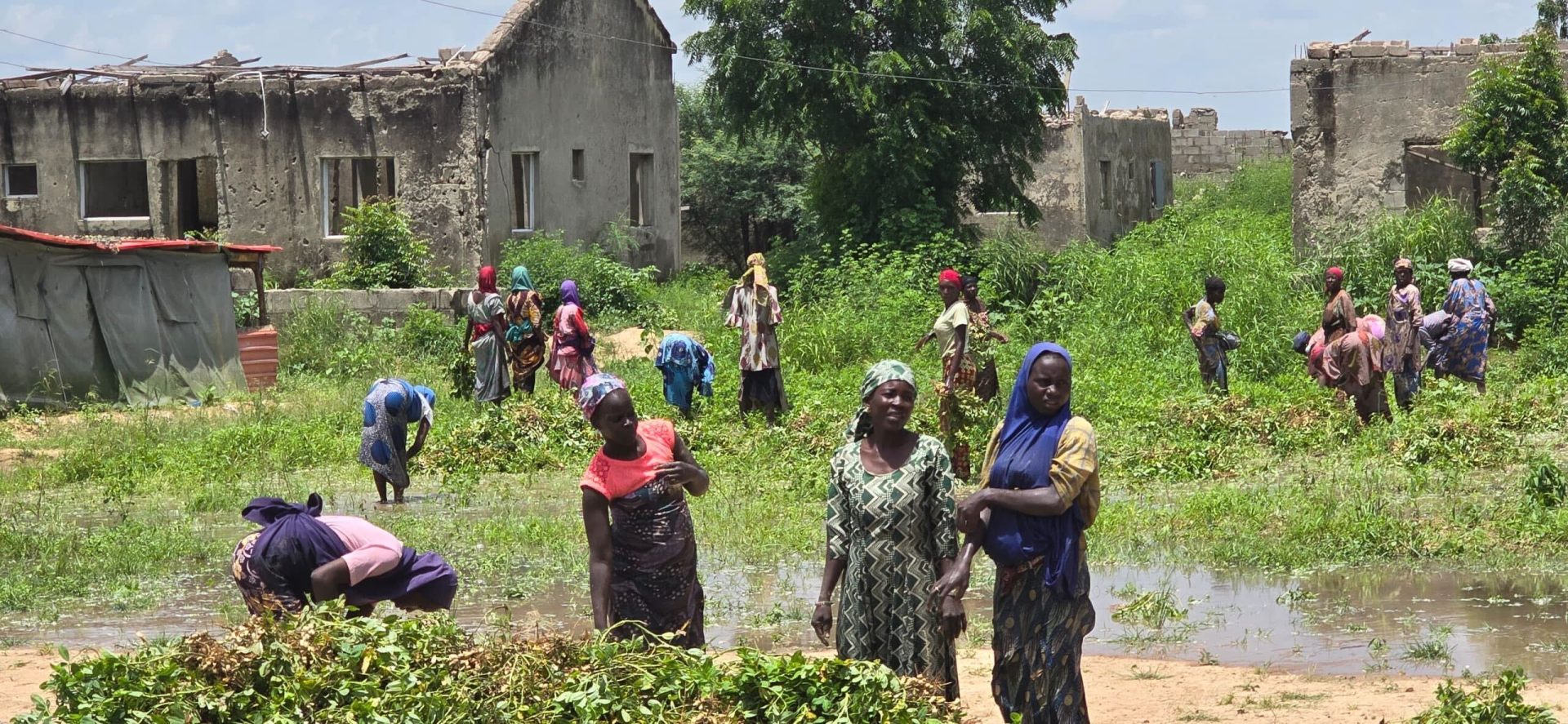
Maiduguri, Nigeria — September 12, 2024: Severe flash flooding that has swept across Northeast Nigeria in recent days is exacerbating the protection risks for civilian communities already affected by over 14 years of armed conflict. While funding and immediate resources are critical to addressing the humanitarian needs of the affected communities, investing in community-led mechanisms to prepare for and respond to natural disasters within the context of armed violence should be a key priority, urges Center for Civilians in Conflict (CIVIC).
“Years of armed conflict in Northeast Nigeria have weakened the mechanisms available to prepare for and respond to natural disasters, leaving communities even more vulnerable to climate-related risks,” said Hichem Khadhraoui, CIVIC’s Executive Director, during a visit to Maiduguri in the northeastern state of Borno this week. “The ongoing floods serve as a tragic reminder of how environmental factors are worsening stability and recovery. Nigerian authorities and international donors must prioritize investing in initiatives that forecast the severity and location of climate-related risks in conflict-affected communities.”
Many farmers lost their crops to flooding, while thousands had to harvest early, worsening already dire food insecurity in the region. More than 239,000 have been affected by the floods following the breach of a dam and continued heavy rains. Already displaced communities have been forced to move again to safer IDP camps and temporary shelters.
In a conflict-affected region like Maiduguri, the floods are expected to impact communities’ access to livelihoods and essential infrastructure, including children’s education. Concurrently, the elderly and civilians with disabilities face complex challenges to basic movement and survival due to the minimal necessary physical infrastructure and support services.
“I came here to meet with local communities, civilians, and military leaders to support efforts of dialogue and understanding between all sides on the protection of civilians as the region continues to face threats of armed violence. However, what I observed this week is that the stability and recovery of the region are also threatened by climate and environmental shocks,” said Khadhraoui.
Despite the challenging circumstances, the voluntary service of CIVIC-led Community Protection Committees (CPCs) has demonstrated resolve, as some members have actively participated in response efforts and assisted flood victims.
“Because of the work I have been doing to protect our communities, I did not hesitate to help people affected by the floods move to safe zones and get some food,” said Ibrahim Jidda, a CPC lead.
Khadhraoui’s visit comes as attacks on civilians continue and tensions mount over increasingly scarce resources.
CIVIC has been active in Northeast Nigeria for eight years, supporting communities in engaging with armed actors to enhance protection. His visit also underscores CIVIC’s commitment to fostering civil-military dialogue and empowering local communities to better navigate the myriad challenges they face.
For more information or to arrange an interview, please contact:
CIVIC Global Communications: [email protected]
In the Hague: Hajer Naili, Director of Communications, [email protected], +31.6.21.69.68.86 / +1 917 889 5982 (WhatsApp)
In Washington, DC: Matthew Longmore, Communications and Media Manager, [email protected], +1.208.403.4216 (WhatsApp)
Spokespersons are available in English and French
About CIVIC
Center for Civilians in Conflict (CIVIC) is a non-profit, non-governmental organization that envisions a world in which no civilian is harmed in conflict. Founded in 2003 by Marla Ruzicka, CIVIC now has a presence in Africa, the Middle East, Europe, and North America. Learn more at www.civiliansinconflict.org and follow CIVIC on Instagram, Twitter, LinkedIn, and Facebook.