Delivered by Dina El-Mamoun, Yemen Country Director, Center for Civilians in Conflict (CIVIC)
Date: May 14, 2025
Location: UN Headquarters, New York
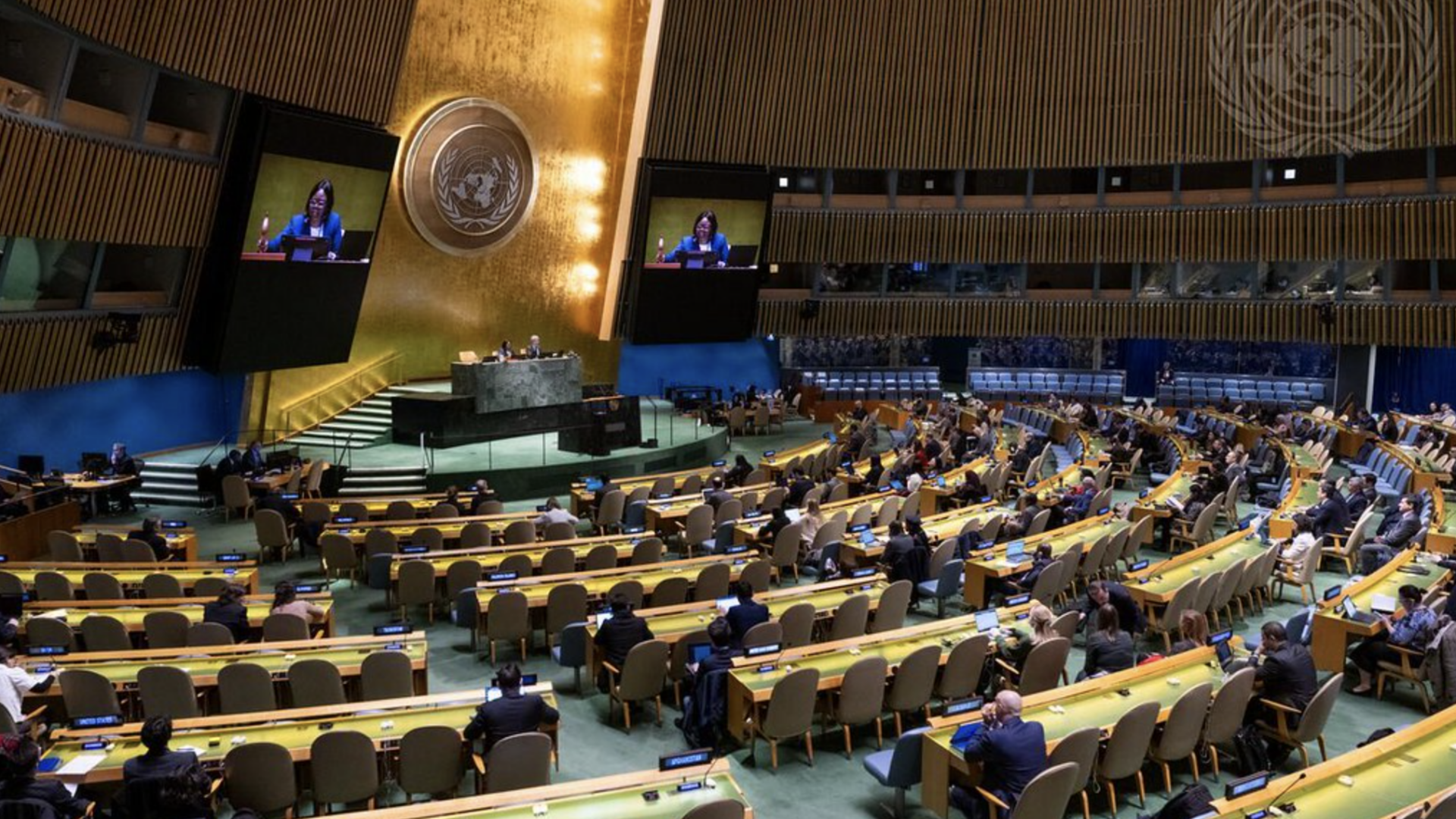
As part of the United Nations Security Council’s monthly briefing on the situation in Yemen—and in the context of PoC Week 2025—CIVIC’s Yemen Country Director, Dina El-Mamoun, delivered a powerful statement on the urgent need to uphold the Women, Peace and Security (WPS) agenda. You can view her full remarks at this UNTV link starting at 00:36:40.
Full Statement
Mr. President, Excellencies, Members of the Council,
Thank you for the opportunity to address you today on behalf of Center for Civilians in Conflict (CIVIC). I speak with urgency and purpose as we mark 25 years since the adoption of Security Council Resolution 1325 on Women, Peace and Security—a commitment that is yet to be meaningfully fulfilled for Yemeni women and girls.
I would like to begin with the words of Amat al Salam Al Hajj, Founder and Chair of the Association for the Mothers of Abductees:
Women in Yemen have suffered greatly from the war. They aspire to peace and justice. Mothers are waiting for their loved ones and calling for freedom for their children. We say peace begins in the hearts of mothers.
Mr. President,
After ten years of conflict, the humanitarian crisis in Yemen remains one of the most severe, and its most punishing consequences are frequently borne by women and girls. The protection of civilians—particularly women—is failing, and the structures meant to uphold international law are faltering.
Women and girls in Yemen continue to be killed, wounded, and displaced. They are not just caught in the crossfire; they are often deliberately targeted and systematically marginalized. Gender-based violence is on the rise, often perpetrated with impunity, and life-saving basic services—including adequate GBV response—remain inaccessible for millions.
Three out of four Yemenis displaced by the conflict are women and children. In many cases, girls under 18 are heading households and trying to survive in camps without adequate shelter or protection. Economic collapse is driving more families to resort to early marriage, deepening existing inequalities, and stripping young girls of their rights and futures.
And still, in these dire circumstances, women lead. Every day on the ground, they play vital roles across the humanitarian-development-peace nexus.
Women are at the forefront of humanitarian response efforts, community-based conflict resolution, and peacebuilding initiatives. They deliver aid to those beyond the reach of large institutions. In 2024 alone, women-led organizations reached over two million Yemenis with life-saving support.
Women are agents of change and experts in the needs of their communities. They mediate disputes and build bridges. Through community protection groups facilitated by CIVIC, women bring communities together to discuss the protection threats they face; women sit with armed actors to demand better protection. As just one example, in one of these groups, women successfully engaged with security forces to limit night raids that terrorized the small communities in their district.
One member of a local initiative supported by CIVIC has mediated between conflict parties for many years and led negotiations to exchange the dead bodies of fighters across frontlines. She told CIVIC: “I physically carried the bodies up and down mountainous areas. I don’t know how I do it, but I think of the mothers and the families in the affected communities.”
Maha Awad, Chair of Woggod Foundation for Human Security, said:
As a diverse group, women have proven themselves to be peacebuilders who understand the importance of authentic dialogues from their local and national contexts.
Yet they face daily risks.
In recent years, there has been a disturbing rise in threats, harassment, and detention of women human rights defenders, humanitarian workers, and peacebuilders. Some have been held for over a year without charge. The message is clear: dissent will be silenced, and women’s participation in peace initiatives suppressed. A climate of fear prevails. This is not only a protection concern—it is a direct threat to peace.
Mr. President, Members of the Council,
Despite the extraordinary work of women across Yemen, they continue to be excluded from meaningful participation in formal peace negotiations and discussions. This results in the marginalization of their unique perspectives and needs and undermines prospects for sustainable peace.
Let us be clear: we cannot continue to celebrate women’s resilience while ignoring the root causes of the insecurity and protection risks they face.
I urge this Council to act on three fronts:
- Demand that all parties to the conflict abide by their obligations under international law to protect civilians, including women and girls, from direct and indirect harm. There must be accountability—including for gender-based violence—and redress for harm caused.
- Increase direct, flexible funding and political support for women human rights defenders and peacebuilders in Yemen. They need legal aid, physical security, capacity-building in their self-protection efforts, funding for their efforts on the ground, and—above all—they need the political backing of this Council.
- Ensure the full, equal, and meaningful participation of women at all stages of the political process. This means no less than 30% representation in all peace negotiations and in post-conflict governance. This is a prerequisite for success. Diplomatic and financial support to Yemen’s peace process must be made conditional on this standard being met.
Mr. President,
Twenty-five years ago, the international community, with the leadership of this Council, promised to make women central to peace and security, based on a shared understanding of the importance of their protection, empowerment, and meaningful participation. Today, that promise is being broken.
The women of Yemen continue to show us what courage looks like. It is time we matched it with the political will and resources they deserve.
The future of Yemen depends on it.
Thank you.