The full-scale invasion of Ukraine by Russia has dramatically altered the lives of millions of Ukrainians. Some were forced to relocate to safer regions or even other countries, while others stayed behind, taking on the responsibility of rebuilding and supporting their communities.
The Kharkiv region has been on the front lines for three years, enduring relentless hostilities. In 2022, the town of Rohan became a battleground—one part was under Russian shelling, while the other lay in a contested gray zone. But after the Russian army withdrew, 80% of the residents had returned home by 2023. Today, the community is coming back to life, with public spaces reopening, volunteer organizations thriving, and a renewed sense of hope.
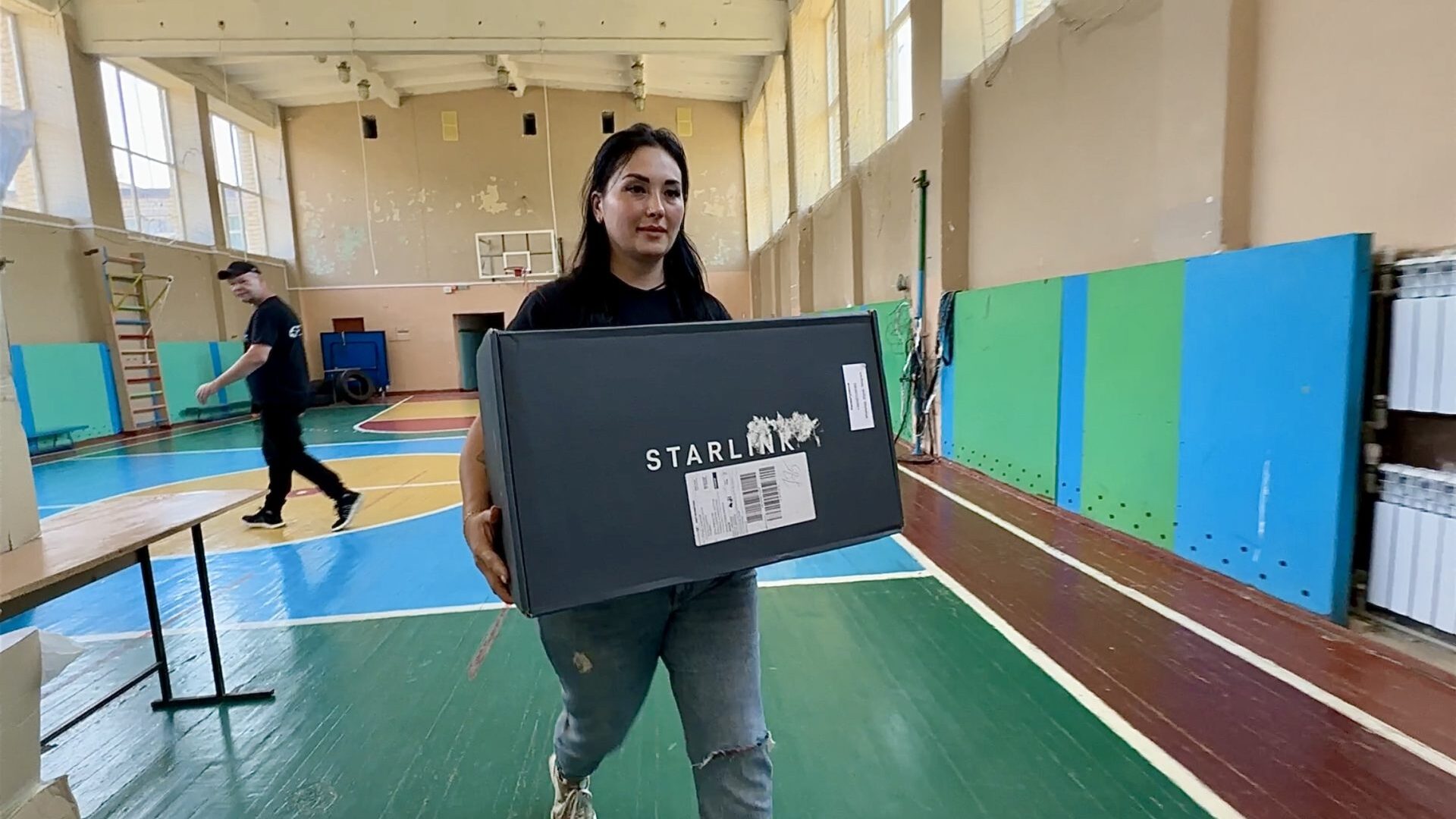
Here, we share the stories of resilience: a schoolgirl who stepped up to deliver humanitarian aid, mothers creating safe havens for children born in the midst of war, and community activists teaching tactical medicine to the elderly.
“These Children Do Not Know a Life Without War”: How the Unbreakable Mom Space Creates a Haven for Childhood
Watch our video about this story
From the very first days of the full-scale invasion, the residents of Rohan felt the brutal reality of war. Russian soldiers were stationed just three kilometers from the village, and the deafening sound of explosions filled the air.
The House of Culture became a vital refuge for the community, serving as the only shelter protecting residents from relentless shelling. When the invaders eventually retreated, locals transformed the building into a modern shelter, where they continue to take cover during air raids.
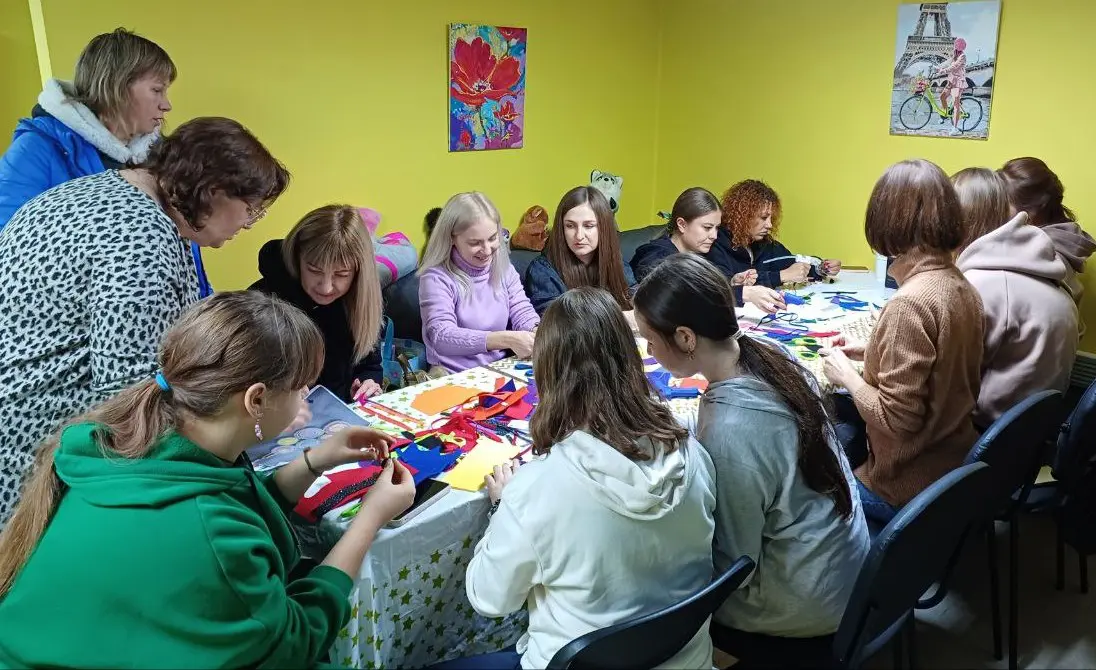
Recently, the NGO Green Landia established a dedicated space for women with children within this shelter—Unbreakable Mom.
Green Landia had been actively supporting families in Rohan even before the war. However, as the invasion escalated, so did the community’s needs. In response, Green Landia expanded its initiatives, now operating ten spaces across the Kharkiv region.
The idea for Unbreakable Mom originated from an unexpected source—a driver who was transporting training organizers. One day, he approached the Green Landia founders and shared his observation: there was a pressing need for a dedicated shelter designed specifically for mothers and young children.
Our colleague was adamant that mothers with small children required a specialized space,” recalls Inna Avramenko, co-founder of Green Landia. “Their needs differ greatly from those of mothers with older children—baby food needs to be heated, and special furniture and equipment are essential. We immediately resonated with the idea because it aligned perfectly with our organization’s mission.
In 2024, Green Landia members participated in a grant competition through the CIVIC Local Initiatives Fund. They proposed the creation of a dedicated space for mothers and young children within a bomb shelter. Their project won, and soon after, Unbreakable Mom was established in Rohan.
As soon as the space opened, the feedback was overwhelmingly positive.
“Mothers are incredibly grateful because there was simply no place for them to go with their children before this,” says Avramenko.
With no functioning kindergartens in the Kharkiv region, Unbreakable Mom has become more than just a shelter—it is a crucial space for both children and parents to socialize.
“Although it’s quite small, the space is incredibly cozy. Up to ten children can be there at a time, allowing both kids and adults to connect, form friendships, and find moments of relief from the constant stress we all endure,” Avramenko explains.
She also notes how the war has profoundly reshaped the role of women. Many have become the heads of their households, as their husbands are either fighting or have been killed. Women now bear the responsibility of caring for children and elderly relatives—both their own and their spouses’—while also having to provide financially for their families.
For those who have chosen to remain in frontline areas, daily life is a relentless cycle of stress and concern for their own safety and that of their children.
“Just the other day, during an air raid, a mother rushed into our space with her two children, aged five and two,” shares local resident Maryna. “She was in a panic. We calmed her down, offered her tea, put on cartoons for the kids, and gave them something to eat. Gradually, she regained her composure. She realized that, at least for that moment, she and—most importantly—her children were safe. That sense of security means everything. The entire community is grateful to have this space.”
Over the past three years, a generation of children has grown up knowing nothing but war. Their mothers now face the immense challenge of ensuring they still experience a childhood filled with joy and discovery.
Spaces like Unbreakable Mom empower women, reinforcing a crucial truth: a child’s well-being is directly tied to their mother’s peace of mind.
I believe we need to create more spaces like this—to ease the burden on women, reduce their stress, help them feel safe and valued, and allow them to move forward,” says a Green Landia representative.
“A woman who walks into this space quickly realizes she is not alone—there are other mothers facing the same struggles. What we’ve seen is that when they come together, they are ready to support one another, to work as a team, and to build a better future for their children—children who were born into war but deserve a life filled with friendship, laughter, and play. And with this space, at least they don’t have to panic every time an air raid siren sounds.”
The founders of Unbreakable Mom firmly believe that every community should have a space like this. All it takes is a small room, some basic household items, and a commitment to creating a warm, welcoming environment where both mothers and children can find comfort.
“I Do Volunteer Work and Then Study In My Free Time”: How a Young Woman Supports Civilians in Kharkiv Region While Learning Mine Safety
Watch our video about Anastasiia
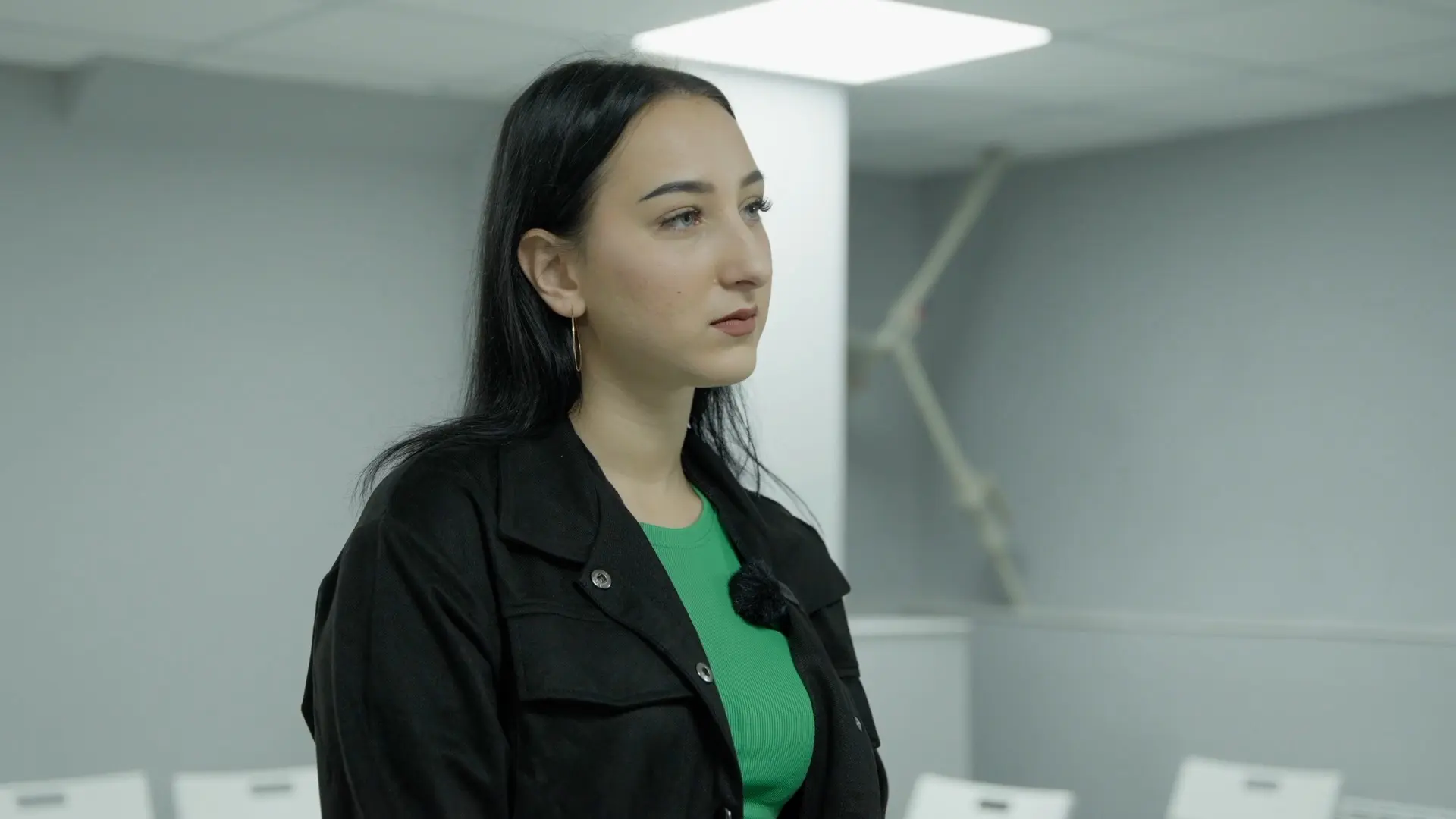
When the full-scale invasion began, Anastasiia was 17 years old, in her final year of school, and serving as the school president. On February 24, 2022, she had a day full of plans—her school was preparing for a special concert, and she and her classmates were set to rehearse theatrical scenes in the assembly hall.
When she heard the first explosions at 5 a.m., she didn’t immediately grasp what was happening. Her mind was still on the upcoming school event, and she asked her parents for permission to go. Instead, they gave her devastating news: “Nastia, what scenes are you talking about? The war has started. There is no more school.”
For the next several days, her family moved between various shelters, seeking refuge from the relentless shelling. As weeks passed, Anastasiia and her parents realized they couldn’t just sit and wait—they had to take action. Her father began volunteering, eventually establishing his own organization, and soon involved his daughter in humanitarian efforts.
At first, she and her parents focused on setting up shelters for displaced people. Later, she became more actively involved in transporting humanitarian aid.
With parts of the Kharkiv region heavily mined, traveling through the area is often dangerous. To prepare herself, Anastasiia started attending mine safety training sessions offered by CIVIC.
The trainings are incredibly valuable because they teach you what to do if you encounter a mine. One of the most important rules is to call emergency services immediately. These exercises instill a sense of responsibility, making you more aware of your surroundings. They not only protect you but also help you safeguard others,” says Nastia.
During one of her aid missions, Anastasiia had to put her training to the test. While delivering humanitarian aid to the Kupiansk district, she was forced to take an alternate route due to constant shelling.
“We were searching blindly for a safe road to Kupiansk and ended up driving into a field. Something didn’t look right ahead, so I stopped the car. I remembered everything I had learned in the CIVIC trainings and didn’t go any further. Looking back, I realize how lucky I was to have that knowledge—it helped me make a critical decision at the right moment,” she recalls.
Anastasiia believes that knowing how to respond in war-related emergencies is now an essential skill for everyone in Ukraine. “War has become part of our daily reality, which is why safety training is so crucial,” she explains.
Now 19, Anastasiia is a university student studying economics in the Kharkiv region. When asked how she balances her studies with volunteering, she smiles and says: “For me, it’s the opposite—I study in my free time and spend most of my time volunteering.”
What motivates her the most, she says, are the grateful faces of those she helps.
“I love visiting the soldiers on the frontline or civilians still living in conflict zones. When I help them—whether it’s evacuating them, bringing them food, or delivering household supplies—their gratitude inspires me to keep going.”
To Anastasiia, volunteering isn’t a duty—it’s a calling. “If you truly want to help, you will find a way,” she says. She also reminds fellow volunteers not to be discouraged, emphasizing that even if people don’t always say thank you, they deeply appreciate the support.
“We Need to Devote More Time to Civilians Who Have Survived Shelling”: How Young People and Pensioners Are Trained in Tactical Medicine and Psychological Support
Watch our video about this initiative
A Shelter Turned Community Hub
In the village of Khroli, within the Rohan community in Kharkiv region, a school shelter has evolved into a center of community life.
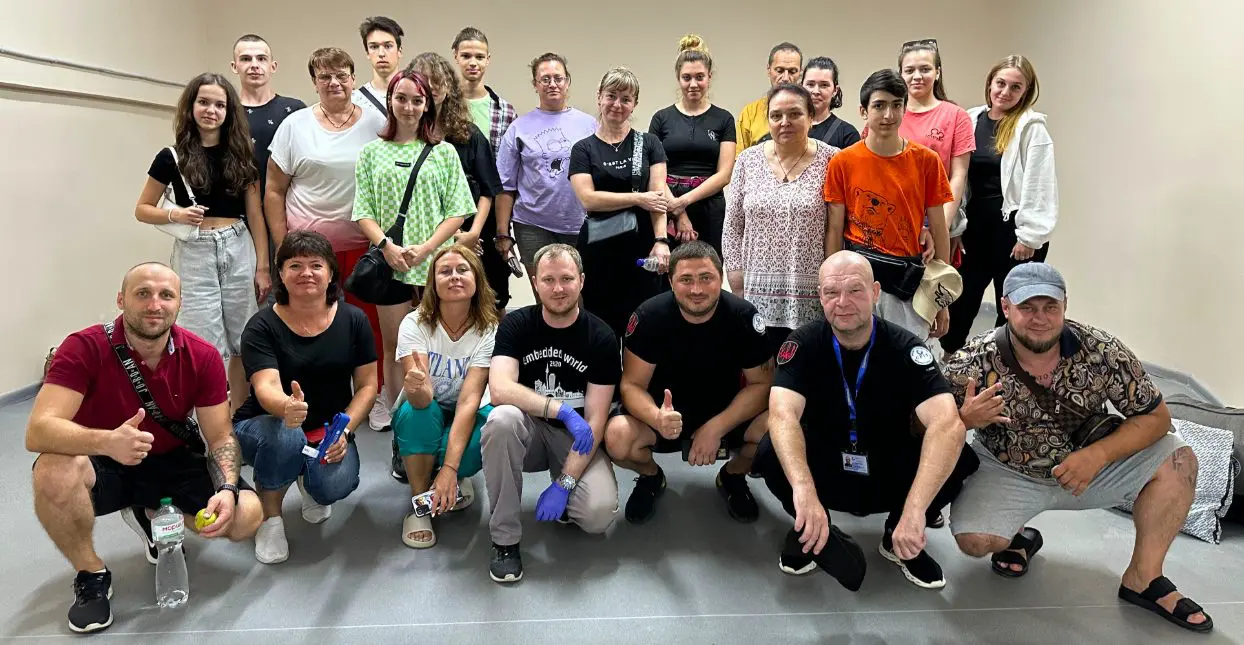
Thanks to a collaboration between the International Trust Charitable Foundation and the Center for Civilians in Conflict (CIVIC), self-protection trainings are now being conducted for local residents, attended by both schoolchildren and pensioners. Additionally, group sessions with psychologists provide emotional support, with a particular focus on women’s mental well-being.
Tactical Medicine Training for All Ages
Emilia Bek-Bulatova, Deputy Director of the International Trust Charitable Foundation, recalls that when the training was first proposed, organizers were unsure whether locals would be interested. However, the response was greater than expected.
“We were amazed to see that even people of retirement age attended our tactical medicine trainings. Despite the fact that the session lasted for 8 hours and required a lot of physical activity, all participants completed it,” says Bek-Bulatova.
So far, the Foundation has organized 54 training sessions. Even after the official project ended, residents have continued gathering at the shelter once a week on their own initiative to practice self-protection and tactical medicine.
Trainers working with local residents have noted that fewer people are choosing to leave the region, while more are returning. These training sessions offer reassurance and hope that, one day, the war will end, and life will return to normal.
Psychological Support and Its Growing Importance
Psychological training sessions have also gained significant interest, particularly among women. Many had already felt unsafe walking home alone in the evening before the war, and the full-scale invasion has only intensified these fears.
“We need to devote more time to the civilian population, especially people from the frontline areas, who often experience the echoes of war.”
Many women have lost their husbands, and countless families have been separated. “There are more and more quarrels between people… These are the psychological traumas that need to be addressed,” Bek-Bulatova adds.
The training sessions not only equip civilians with survival skills but also prepare them for life after the war, helping them understand how to reintegrate veterans into the community and respond to the challenges faced by those who have endured extreme trauma.
“Projects like this not only provide knowledge but also form the communities where everyone can find support. They lay the foundation for psychological resilience and help people feel confident in their capabilities. When everyone knows that they are not alone in their concerns, the community becomes stronger, ready to face any challenges that war may bring,” summarizes Maryana Barchuk-Halyk, Senior Civilian Protection Officer at CIVIC.
The Vulnerabilities of Frontline Communities
Supporting frontline communities remains crucial. According to Alexander Grif, Country Director of CIVIC Ukraine, “it is the residents of these areas who are most exposed to armed conflict, environmental hazards, or economic instability. They face disproportionate vulnerabilities compared to residents of relatively safe areas.”
Grif further emphasizes the importance of community-driven resilience efforts:
When local residents actively build and improve their communities, they foster resilience, self‐reliance, and social cohesion and improve self-protection practices – which is especially important in Ukraine due to the high likelihood of repeated cycles of violence in communities close to the frontline. In these settings, initiatives led by members of the community can transform everyday spaces into centers of mutual support, where local knowledge and networks help mitigate risks and adapt to challenges. Residents who see tangible improvements—such as concrete evacuation plans, better notification systems, and closer relations with local and military authorities—tend to develop a stronger sense of ownership and pride, which not only improves quality of life but also improves sustainability of these efforts and makes it harder for the enemy to undermine government institutions.
The Role of NGOs and the Challenge of Dependency
However, Grif also acknowledges the complexities of external support:
“External support from NGOs to communities can be a double-edged sword. By providing financial resources, technical expertise, and capacity-building training, NGOs help bridge the gap between local needs and the often limited public resources in these vulnerable areas. For example, initiatives that combine external funding with locally driven planning—such as community-driven development programs—empower residents to decide on priorities and implement PoC solutions that are context-specific. This kind of support can strengthen community structures by enhancing social capital and creating networks that facilitate both economic opportunity and collective security.
On the other hand, if NGOs provide support to the community without considering their concerns and priorities, its projects often fail to take root locally. When residents require heating, the INGO distributes rice because it doesn’t listen to the population. Without genuine local involvement, residents may see the interventions as imposed rather than as their own solutions, resulting in low community ownership and a heavy dependence on external support. In a conflict as long-lasting as in Ukraine, this dependence can have serious, negative consequences on the self-protection practices and resilience of a community.”
Read this article in Ukrainian here.
CIVIC in Ukraine
CIVIC has been present in Ukraine since 2017, conducting research and on-the-ground activities assisting the Ukrainian government and the Armed Forces of Ukraine (AFU) in the development and implementation of tools, training, and policies on protection of civilians. CIVIC in Ukraine is also supporting local communities in the areas at risk of escalation of hostilities and in newly liberated areas by strengthening their preparedness and resilience to protection threats, building effective coordination systems with the military, local authorities and communities, and amplifying civilians’ voice through research and advocacy.