 Since 2003, US airstrikes in Somalia have caused significant civilian harm, though most reported incidents of civilian harm have been deemed “unsubstantiated” by US Africa Command (AFRICOM). In the few cases the US military has deemed credible, the Department of Defense (DoD) has not provided a response beyond public acknowledgment that it mistakenly killed civilians. Survivors and victims of civilian harm incidents that have not been recognized by the DoD have been left to wait for answers from the US government with limited hope of official contact, let alone meaningful amends or redress.
In August 2022, the DoD released the Civilian Harm Mitigation and Response Action Plan (CHMR-AP), which outlines an overhaul of the Department’s policy and practice around civilian protection issues. Additionally, the DoD issued the long awaited Instruction on Civilian Harm Mitigation and Response (CHMR DoD-I) in December 2023, which formalized the principles and plans described in the CHMR-AP into official DoD policy.
Both documents call for improved and expanded policy and procedures for responding to civilian harm. Notably, they prescribe the development of a “menu” of response options that provide commanders with the flexibility to respond to harm in a contextually and culturally appropriate manner.
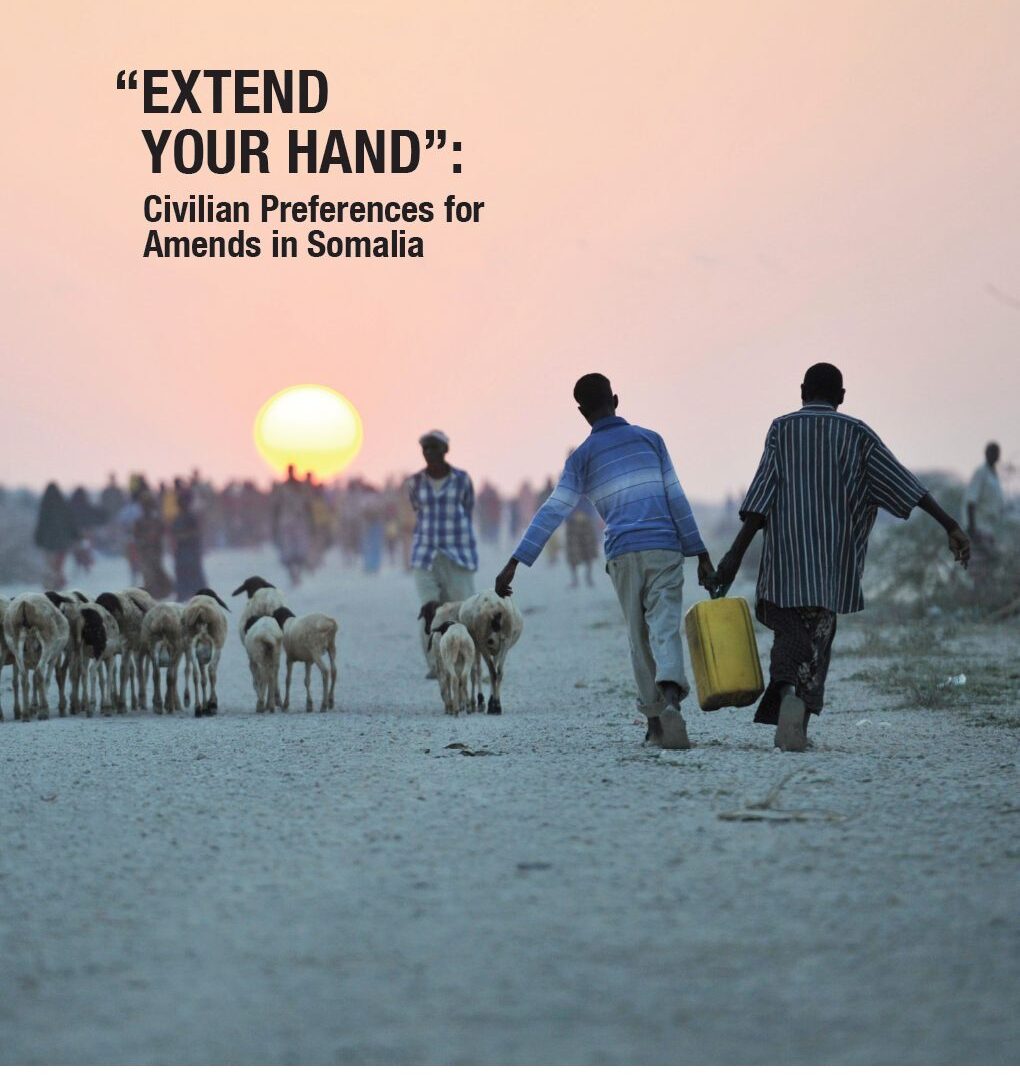
To better understand Somali victims’ and survivors’ preferences around individual- and community-level amends, CIVIC interviewed civilians who identified as victims of US military operations in Somalia. This brief explores how Somali victims and survivors think about justice for civilian harm, the responses they would like to see from the DoD, and the challenges and opportunities that exist for implementation. The brief also lays out concrete recommendations, informed by civilian interviews, for DoD policy and practice.
Read the full brief here.