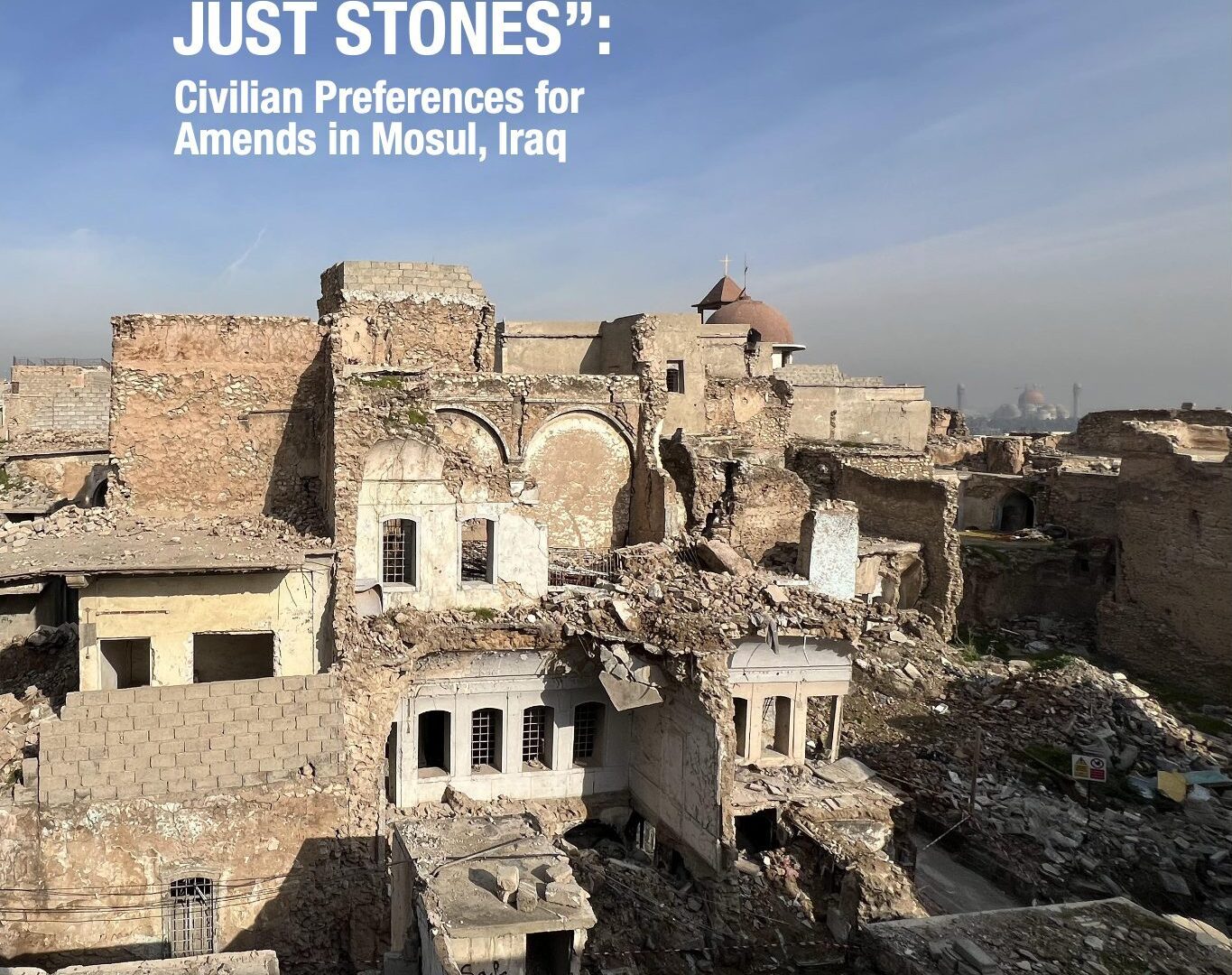
 The Battle of Mosul, fought by the Iraqi armed forces and a US-led Coalition against the Islamic State in Iraq and Syria (ISIS), lasted nine months, resulting in thousands of civilian casualties, internally displaced persons, and destroyed homes. While a large portion of this harm occurred in West Mosul during the last stages of the battle, its impact was widespread, affecting nearly every household and leaving deep scars still visible today, with many families still suffering and in need. In the aftermath of this and other civilian harm, the US Department of Defense (DoD) began taking steps to improve its civilian protection practices and policies, including for responding to civilian harm resulting from its operations.
In an effort to inform DoD responses, CIVIC interviewed 33 civilian victims and survivors of harm from the US-led Coalition, as well as fifteen community leaders, to gauge the preferences of Mosul’s residents for amends from the US. Findings from these interviews illustrate a significant psychological burden still being carried by Mosulis from their traumatic experiences. Remnants of the harm can also still be seen in the prevalence of individuals with permanent disabilities from explosive weapons injuries. Many families continue to struggle economically from the loss of their homes, property, and livelihoods as well as ongoing medical costs for life-long disabilities and health complications. Arising from these experiences of harm, civilians demonstrated preferences for financial assistance at the individual level, along with the reconstruction of critical infrastructure, the clearance of rubble and explosive remnants of war, and medical care as their top priorities for a response from the United States. These findings emphasize the importance of not replacing individual-level amends, like condolence or ex gratia payments, with solely community-level responses, while also reflecting that individual-level amends alone may not be able to fully address harm experienced so profoundly across a community.
This research also considers the advantages, disadvantages, and challenges of providing community-based amends for civilian harm. Our findings aim to inform how governments can best implement amends programs that are responsive to the specific needs and preferences of the civilian community, especially in places suffering from the aftermath of urban warfare and the use of explosive weapons in populated areas.
Based on our findings, CIVIC makes a number of recommendations for the US and its coalition partners in Mosul, as well as for broader US amends policy and practice.
Read the full brief here.


.بإمكانكم الاطلاع على التقرير كاملا هنا